We are working to ban inhumane and dangerous mink farming in the United States and the European Union, as well as pushing legislative proposals.
The Cruelty and Public Health Risks of Mink Farming
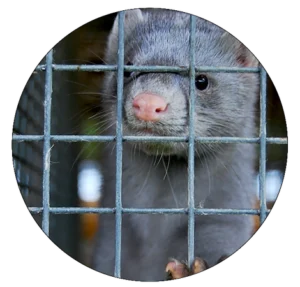
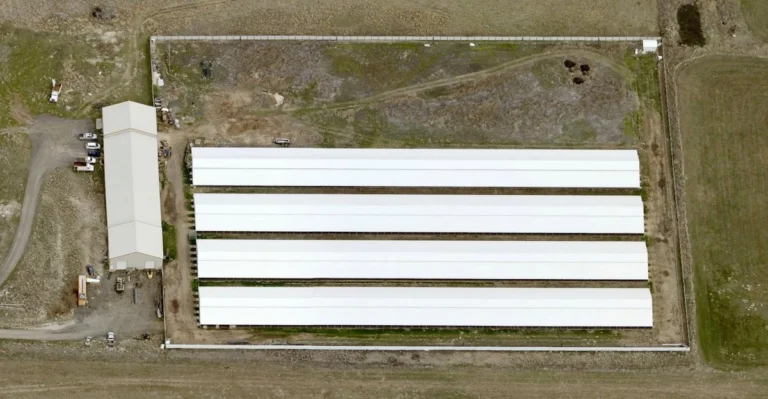
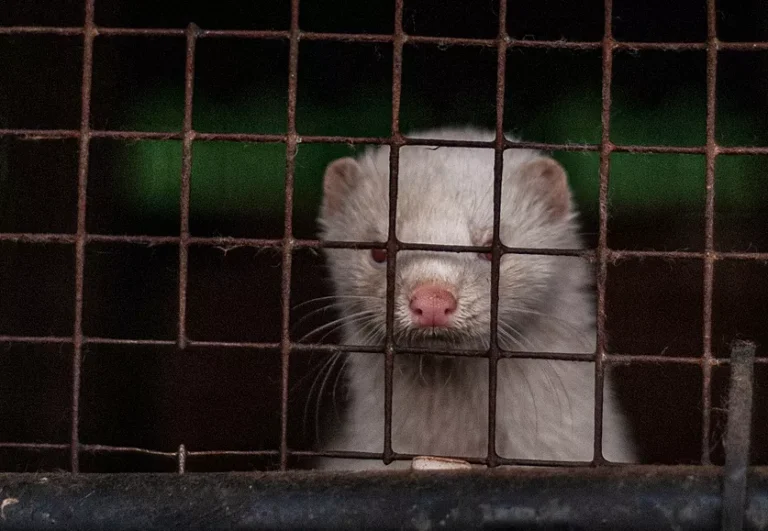
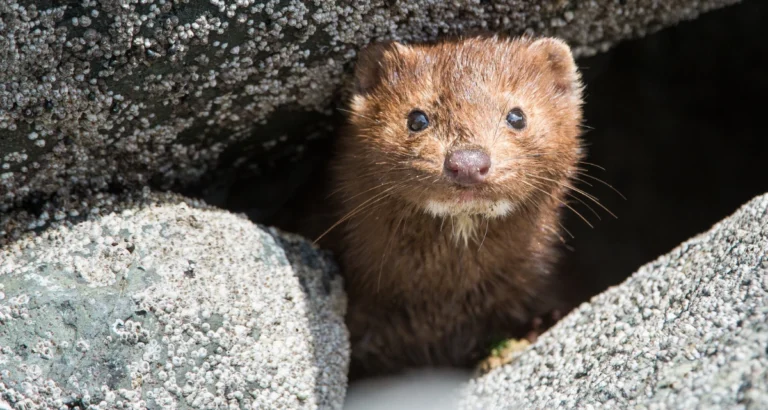
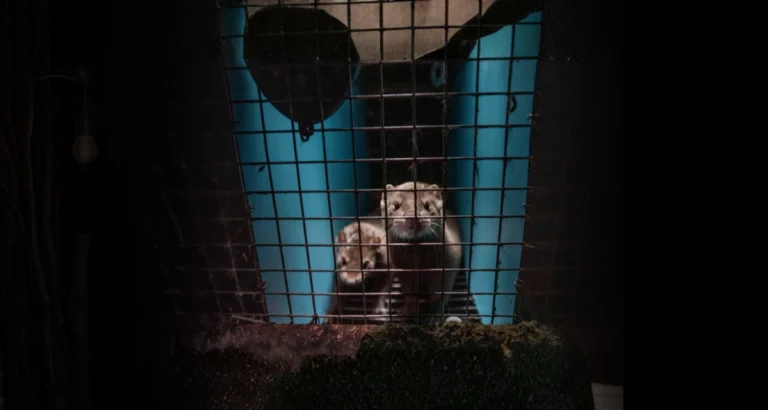
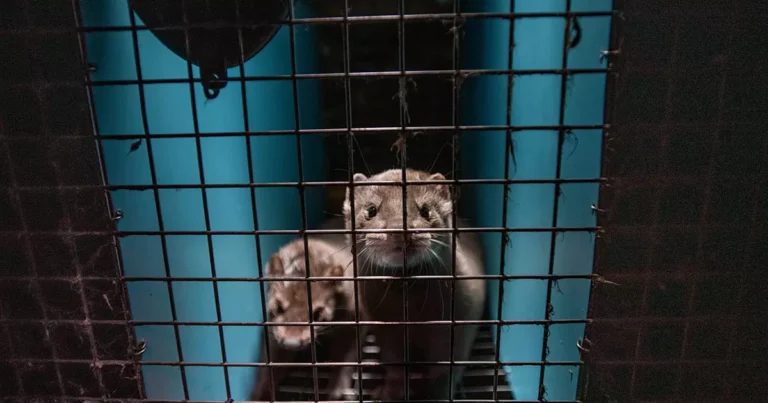
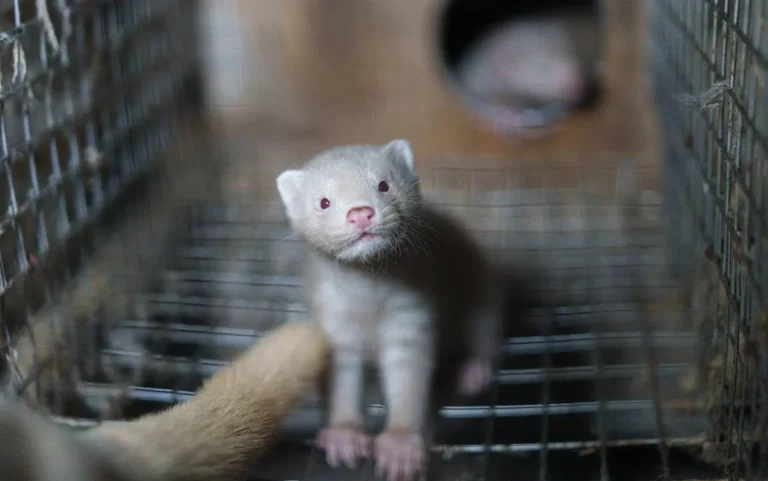
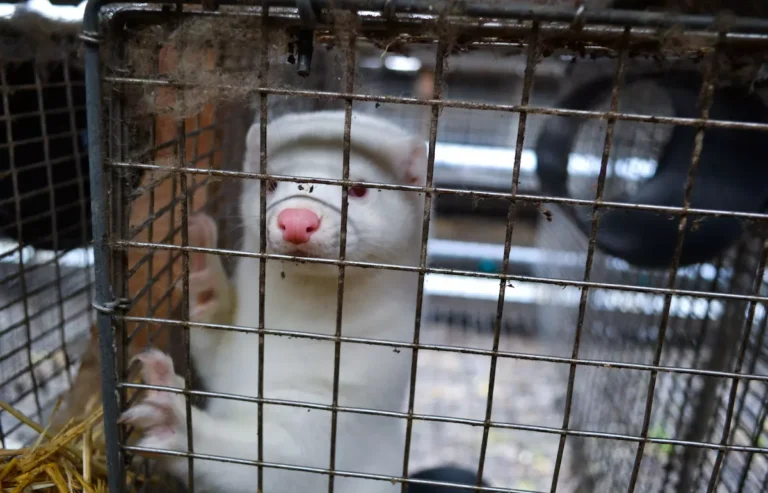
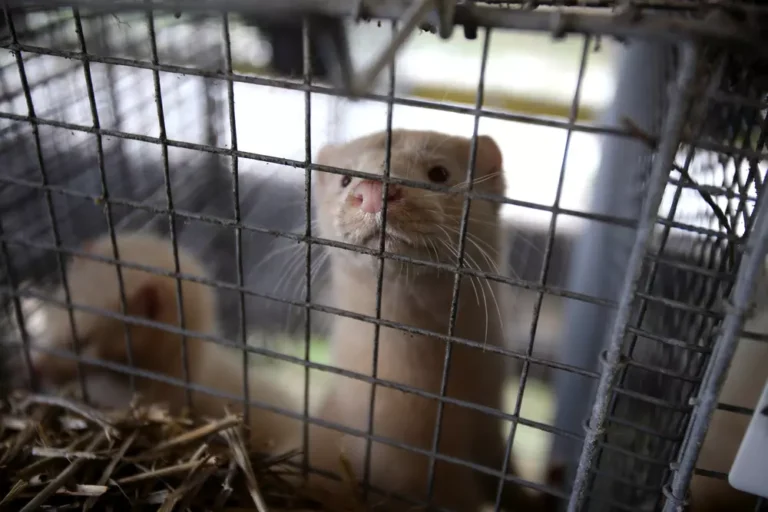
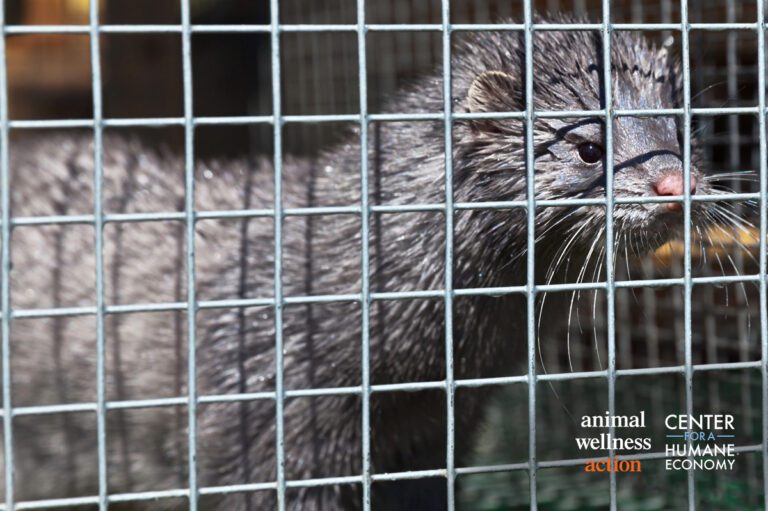
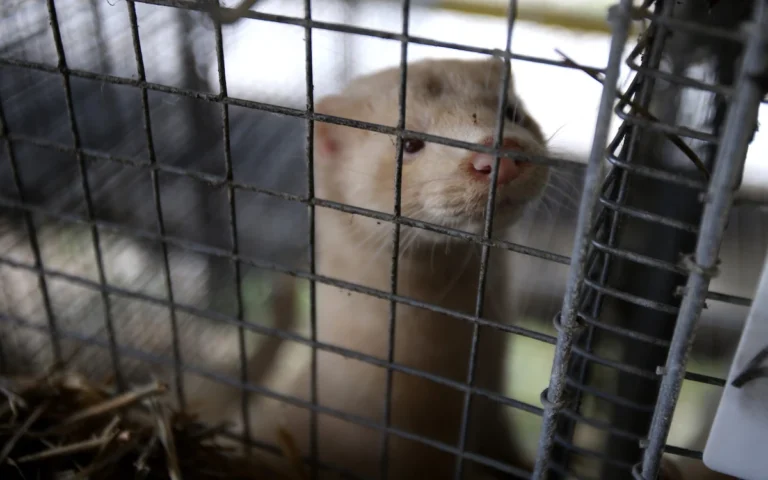
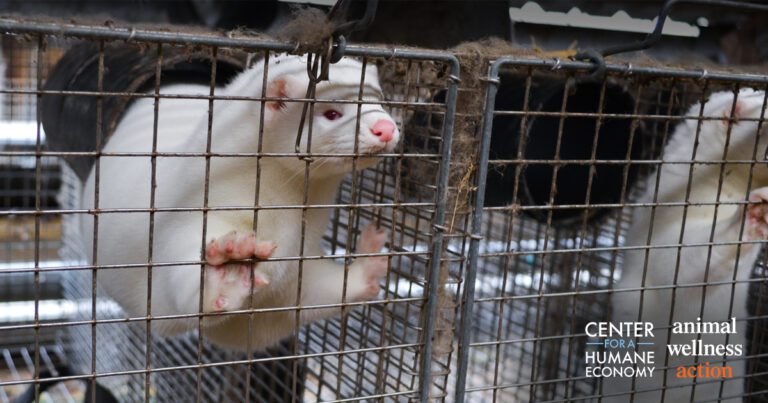
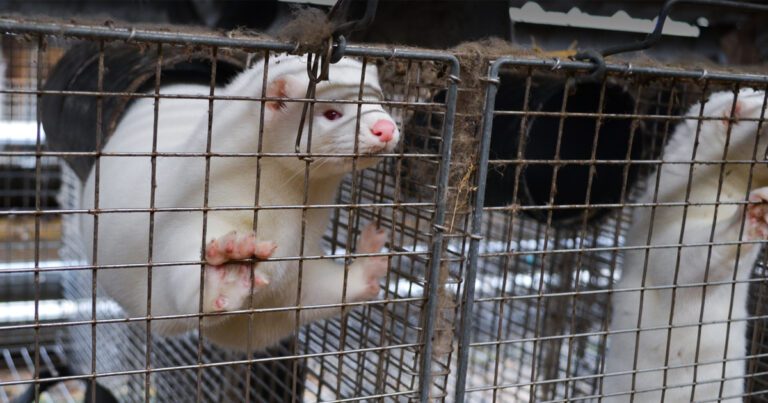
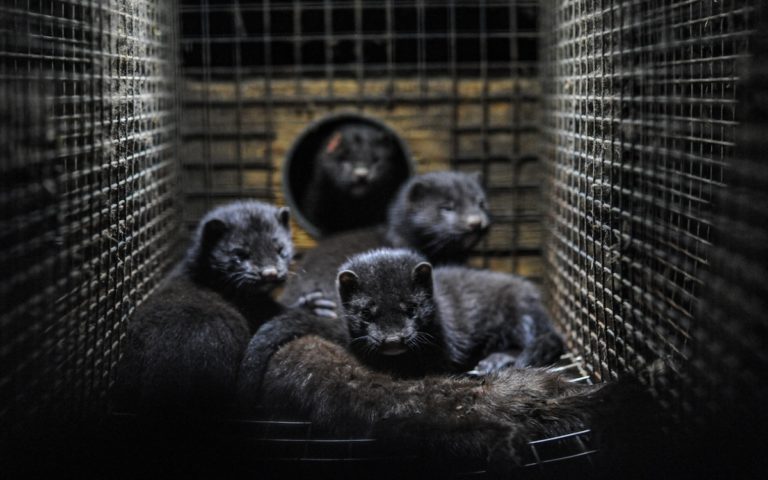
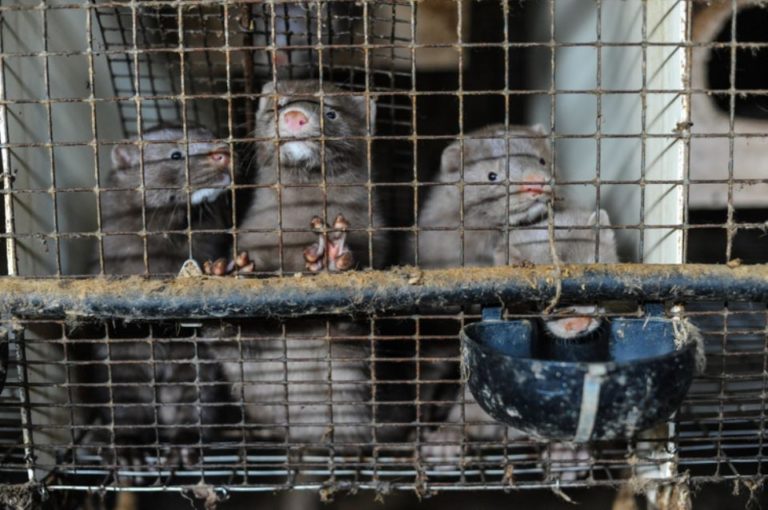
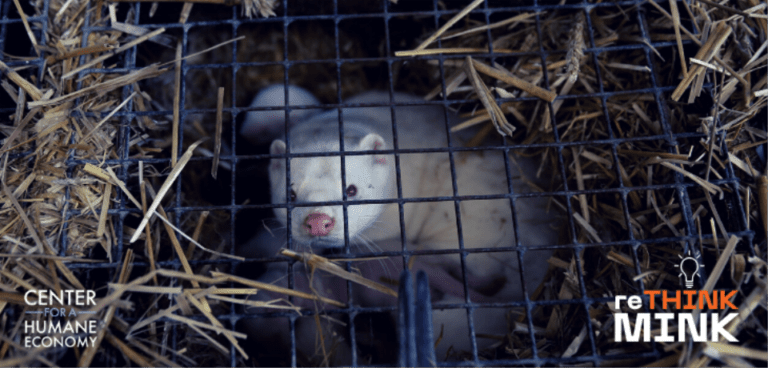
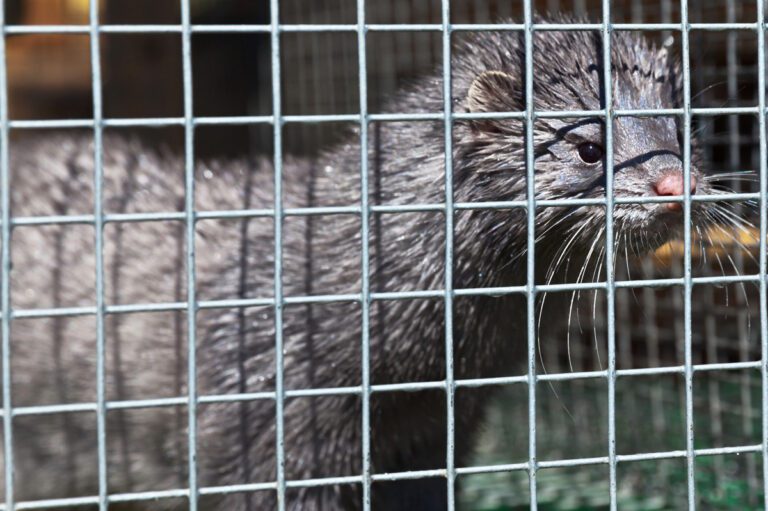
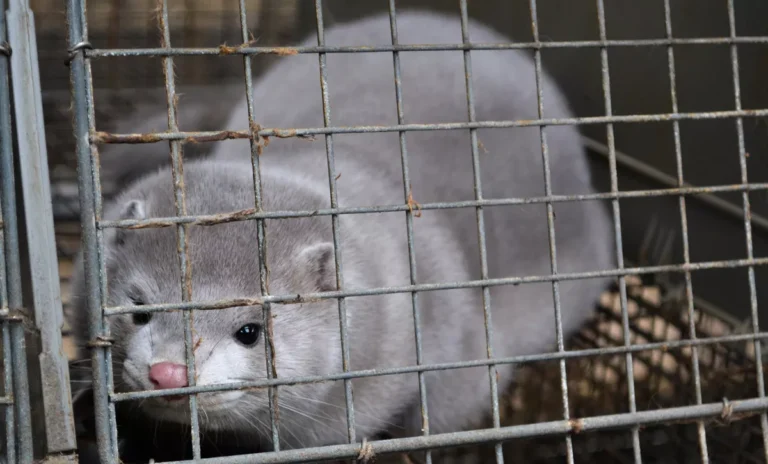
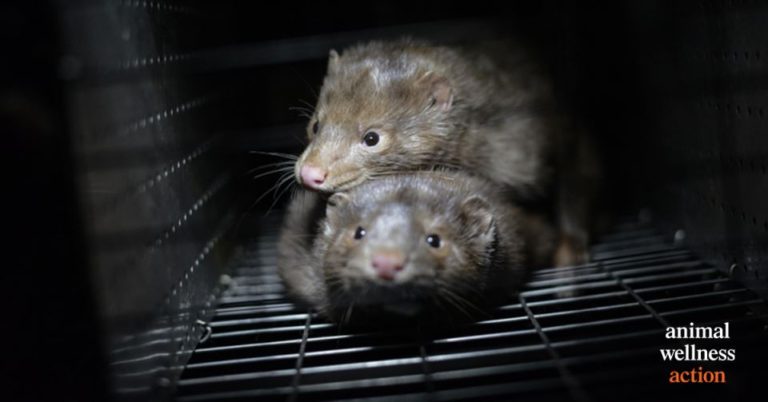
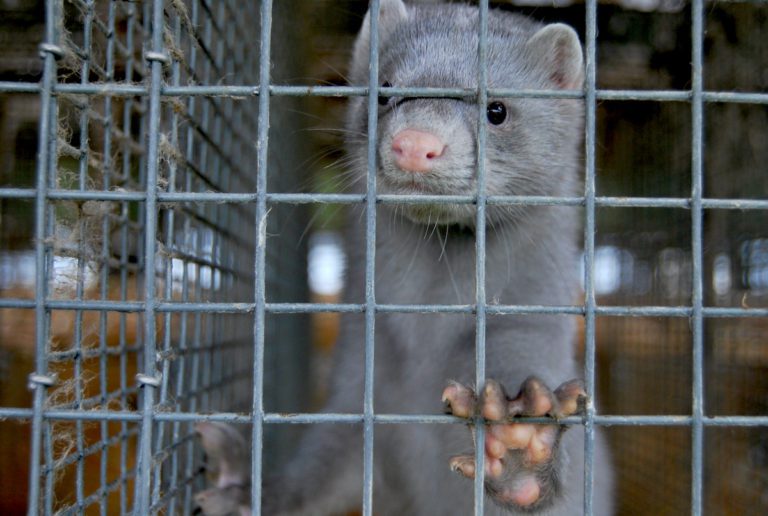
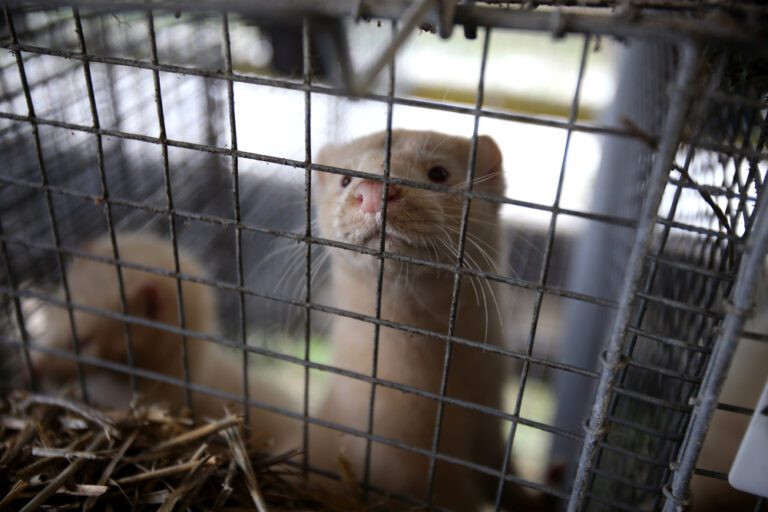
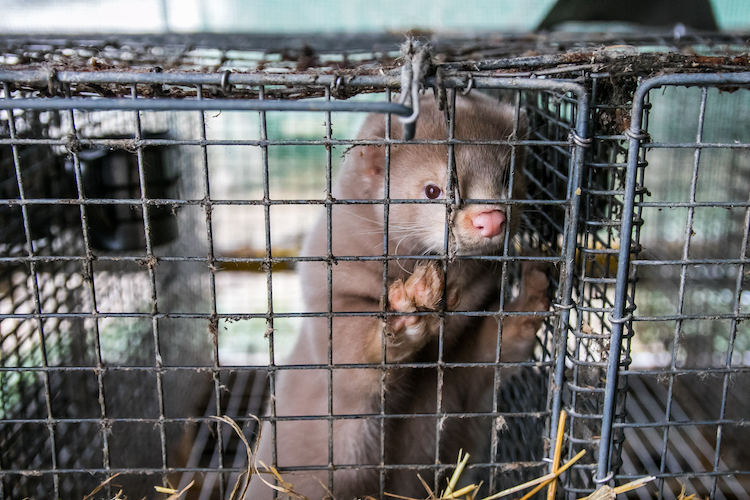
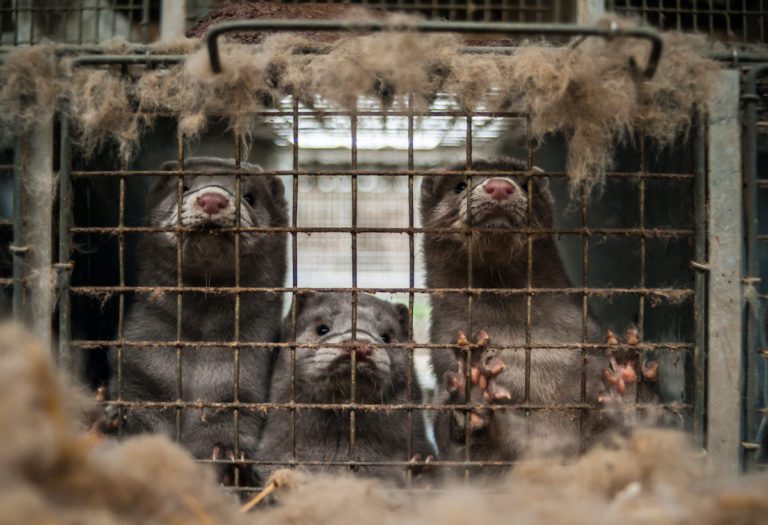
Mink farms subject wild, solitary, territorial animals to small, barren cages and highly stressful, unnatural conditions. The resulting distress can lead to extreme aggression, including cannibalism.
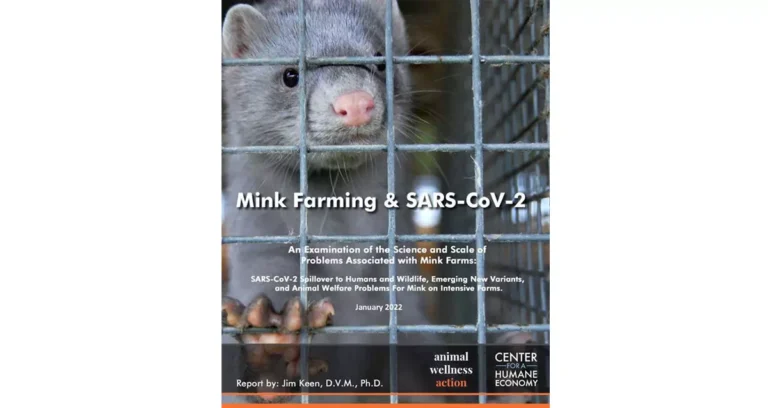
Mink are also bilateral transmitters of SARS-CoV-2, making mink farms a serious risk for spreading the virus and providing opportunities for new variants to emerge.
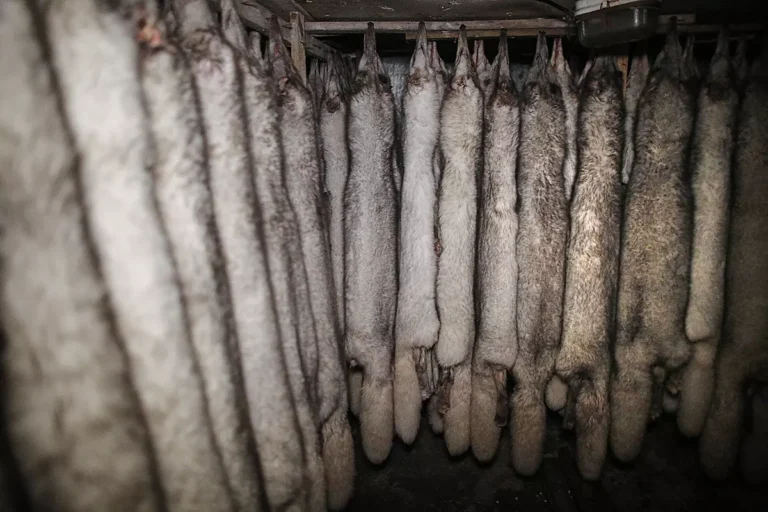
Before the SARS-CoV-2 pandemic, approximately 60 million mink were killed worldwide each year for their pelts, with Europe accounting for roughly half of global production and the United States about five percent. During 2020–21, viral outbreaks occurred on more than 440 mink farms across the West, with at least three variants emerging in Denmark, France, and the United States.
Banning Mink Farming in the U.S. and European Union
We are determined to end mink farming in the United States and the European Union by advancing legislative proposals in both jurisdictions. Banning mink farms would address the inherent cruelty of confining these wild animals in unnatural conditions while eliminating a significant source of disease transmission and viral evolution.
We are pushing lawmakers to recognize that mink farming is not only an animal-welfare issue but also a public-health concern — and to take action before another outbreak creates new risks for people and animals.