The Battle Over Animal Welfare in the Farm Bill
A ban on greyhound racing was added to the Farm bill, but there’s continuing debate over a range of other provisions, good and bad
- Wayne Pacelle
This week brought major developments in Congress on the long-delayed Farm bill, and I want you to hear directly from me about what happened inside the House Agriculture Committee — the good, the bad, and what comes next.
First, the good news.
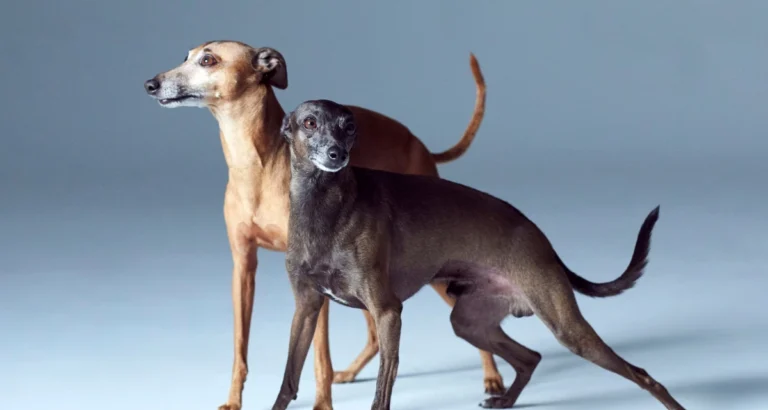
During the committee’s markup of the Farm bill — formally titled the Farm, Food, and National Security Act, H.R. 7567 — lawmakers adopted our Greyhound Protection Act as an amendment. This provision, formulated by Animal Wellness Action and our partners at GREY2K USA Worldwide, will prohibit greyhound racing nationwide, ban U.S. gamblers from betting on foreign races, and block the export of American dogs for racing abroad.
This is the first-ever vote in Congress to phase out greyhound racing in the United States, and it passed with bipartisan support by voice vote.
For decades, greyhounds have endured life in stacked metal cages for up to 23 hours a day, only to chase a mechanical lure at such a breakneck clip that catastrophic injuries result. Broken legs and backs, cracked skulls, paralysis, and death have all been documented at tracks.
The industry has been in free fall as a result of unrelenting advocacy and exposure of inhumane practices. Once the sixth-largest spectator sport in the country, greyhound racing now operates at just two tracks in West Virginia.
We took a giant step in accelerating the decline of this enterprise by working with Florida voters in 2018 to ban dog racing in that state — which at the time had 12 of the 18 operating tracks in the nation. And you can draw a straight line from the election results on Amendment 13 in Florida — with 69% of Florida voters choosing to protect greyhounds — to the vote after midnight Wednesday to secure language in the bill to ban greyhound racing nationwide.
We are deeply grateful to Rep. Salud Carbajal, D-Calif., the committee member who offered the greyhound-protection amendment with the active support of Reps. Zach Nunn, R-Iowa, and Don Davis, D-N.C. We are also grateful to Rep. Randy Fine, R-Fla., for co-leading this bill in the House with his three above-mentioned colleagues who serve on the Committee on Agriculture.
The passage of this pro-animal provision, in a committee whose Republican members look very skeptically at the most mainstream animal welfare policies, shows us one thing: there is now a clear national consensus that greyhound racing is archaic and inhumane.
Still a Deeply Flawed Farm bill
But while the mid-week vote on greyhounds is a moment to celebrate, the Farm bill contains other provisions that are anything but good policy for America.
The bill approved by the Agriculture Committee by a vote of 34–17 contains one provision in particular that we unalterably oppose: language to return us to the cage-age era of animal agriculture, vitiate states’ rights, and undo the votes of 10 million Americans by nullifying Proposition 12 and Question 3, two landmark farm animal protection laws. And it will prohibit any other states from adopting these kinds of strong farm animal protection laws.
Let me be clear: we will never support a Farm bill that dismantles these voter-approved animal welfare standards and tries to put animals back in immobilizing cages.
We are also alarmed that the committee did not readily adopt the core provisions of the FIGHT Act — our latest effort to eradicate dogfighting and cockfighting crimes, including our exports of hundreds of thousands of fighting animals to other nations. That legislation was offered as an amendment to the Farm bill by one of the FIGHT Act’s original co-sponsors, Rep. Shri Thanedar, D-Mich. Along with Mr. Thanedar, the FIGHT Act’s Republican and Democratic co-leaders, Reps. Don Bacon, R-Neb., and Andrea Salinas, D-Ore., and co-sponsor Rep. Carbajal, all spoke up strongly in support of the amendment.
Unfortunately, Ag Committee Chairman Glenn “GT” Thompson, R-Penn., used scaremongering tactics and an obvious misreading of the law and the FIGHT provisions to strip out three of four of the amendment’s components using a procedural maneuver that had not been invoked by the committee in years.
Chairman Thompson falsely claimed the FIGHT Act would add farm animals to the Animal Welfare Act for the first time. In doing so, he put himself at odds with 15 sheriffs and district attorneys from his own congressional district who asked him to support the FIGHT Act, as well as the Pennsylvania Sheriffs’ Association, Pennsylvania District Attorneys Association, Pennsylvania Chiefs of Police, and nearly 1,100 other endorsing organizations nationwide, representing law enforcement, commercial agriculture, and animal welfare.
But one provision of the FIGHT Act did survive and get adopted into the Farm Bill — and it is valuable. In the end, the committee approved language to ban gambling on animal fights, both in-person and online. In an era of rapidly expanding digital gambling, this measure will give law enforcement another powerful tool: disabling online animal fighting gaming websites and also, when authorities raid a dogfighting or cockfighting pit, charging the gamblers surrounding the fighting pits with potential felony offenses for their illicit wagering on staged animal battles.
But there’s no good reason for three other crucial provisions to be omitted from the Farm Bill, unless you are a cartel or gang member or some other enthusiast of dogfighting or cockfighting. We’ll continue making the arguments with lawmakers on the merits to restore these provisions of the FIGHT Act, including forbidding the smuggling of fighting birds through the U.S. Postal Service.
Other Policy Fights Loom
Disappointingly, this Farm bill does not yet include the SAFE Act, which would end the live export of American horses for slaughter abroad and codify a domestic ban on butchering horses for consumption. Last year alone, 25,000 American horses were shipped to foreign slaughter plants, primarily in Mexico, with the meat exported overseas.
We should not allow “kill buyers” to steal American horses by tricking horse lovers into handing them over so they can cram them into a truck and send them on a thousand-mile journey to some horrid slaughter plant in Mexico — all to satisfy economically unmeasurable, niche markets of diners in Old World enclaves.
This trade represents a negligible contribution to the global food supply, and the horses don’t deserve this fate. They were brought into this world for other, less utilitarian and pain-inducing purposes.
We’ll be pressing that case, too, in the weeks ahead.
To be sure, the fight over the Farm bill is in its early stage. The legislation must still go to the full House of Representatives, and then the Senate will have its say.
We will work every angle to defend Proposition 12 and Question 3, pass a FIGHT Act that denies animal fighting commerce and crimes, advance the anti-horse-slaughter legislation, and secure final passage of the Greyhound Protection Act.
This is going to be a tough legislative battle, but your support gives us the ability to stay in the fight.
The House committee vote this week showed both the pathways and the potholes on the road to legislative progress. But we’ve faced these fights before — and together, we’ve prevailed.
Wayne Pacelle, president of the Animal Wellness Action & Center for a Humane Economy, is the author of two New York Times bestselling books, “The Bond” and “The Humane Economy.”