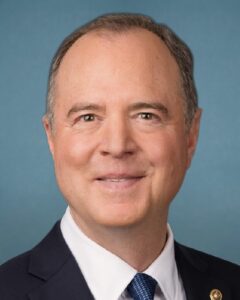
Tenure: 118th–119th Congresses (House service: 107th–118th Congresses)
Years of Service: 2024–Present
Notable Actions
119th Congress
✅ Lead cosponsor of the Captive Primate Safety Act, S. 1594, to prohibit the private ownership, breeding, sale, transport, and other commercial activities involving nonhuman primates by amending the Lacey Act, while exempting accredited zoos, sanctuaries, research facilities, and certain other qualified entities. The legislation is designed to protect both public safety and the welfare of highly intelligent primates by ending the commercial pet trade in these animals.
✅ Cosponsor of the Better CARE for Animals Act, S. 1538, to strengthen enforcement of the Animal Welfare Act by expanding federal authority to investigate and prosecute animal cruelty violations and improve coordination between the U.S. Department of Agriculture and the Department of Justice.
✅ Cosponsor of the Fighting Inhumane Gambling and High-Risk Trafficking (FIGHT) Act, S. 1454, to strengthen federal enforcement against animal fighting and related criminal activity.
✅ Cosponsor of FDA Modernization Act 3.0, S. 355, to direct FDA to publish a final rule to implement a law enacted in December 2022 that eliminated a Depression-era requirement for animal testing in the Federal Food, Drug and Cosmetic Act (21 USC § 355) and allows for innovative 21st-century human-relevant test methods where appropriate.
✅ Lead cosponsor of Canyon’s Law, S. 2179, to prohibit the use of M-44 “cyanide bombs” on federal public lands, protecting wildlife, companion animals, and people from these indiscriminate and highly toxic predator-killing devices.
✅ Lead cosponsor of the Puppy Protection Act, S. 4437, bipartisan legislation to strengthen federal standards of care for dogs kept by commercial breeders by improving requirements for housing, veterinary care, exercise, socialization, and humane breeding practices.
✅ Voted “Nay” on S.J. Res. 23 (Senate Roll Call Vote 122), a Congressional Review Act resolution to overturn federal regulations strengthening implementation of the Endangered Species Act, including protections governing the listing of imperiled species and designation of critical habitat. A “Nay” vote is the pro-animal position because it supported retaining stronger federal protections for threatened and endangered wildlife and their habitat.
❌ Voted “Nay” on the motion to proceed to S.J. Res. 69 (Senate Roll Call Vote 597), a joint resolution under the Congressional Review Act to bring the measure before the Senate for consideration to overturn the U.S. Fish and Wildlife Service’s Barred Owl Management Strategy, which authorized the large-scale killing of barred owls in Washington, Oregon, and California. A “Nay” vote is the anti-animal position because it opposed moving forward with a vote to repeal the barred owl kill plan.
117th Congress
✅ Approved by unanimous consent, the Big Cat Public Safety Act, H.R. 263, to prohibit most private ownership and breeding of lions, tigers, and other big cats while restricting public contact with these dangerous wild animals. The law was designed to curb the exploitation of big cats in roadside zoos and cub-petting operations, improve animal welfare, and enhance public safety by limiting private possession of these species.
111th Congress
✅ Approved by unanimous consent the Animal Crush Video Prohibition Act, H.R. 5566, to prohibit the creation and interstate distribution of obscene animal-crush videos depicting intentional acts of extreme animal cruelty. The legislation was enacted as Public Law 111-294. The Senate initially passed H.R. 5566 with an amendment by unanimous consent and later agreed to the House amendment by unanimous consent.
109th Congress
✅ Approved by unanimous consent the Pets Evacuation and Transportation Standards (PETS) Act, H.R. 3858, requiring state and local emergency preparedness plans to account for the rescue, care, shelter, and evacuation needs of people with household pets and service animals during disasters. The Senate passed the measure with an amendment by unanimous consent on August 4, 2006, and it became law.