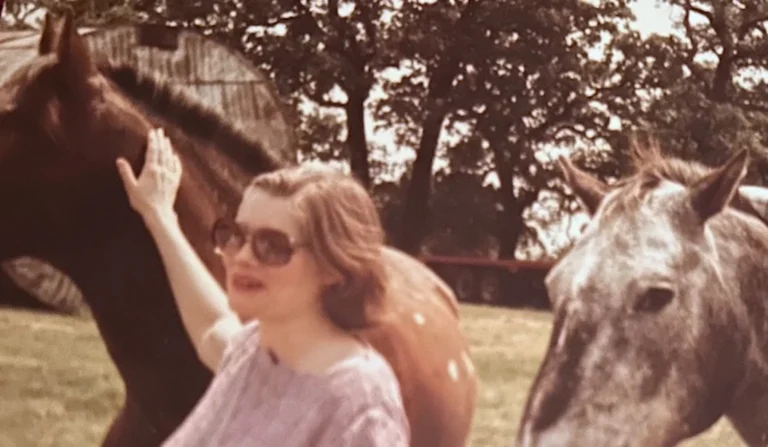
Marian Probst, the co-founder with Cleveland Amory of The Fund for Animals, an immensely consequential figure in the animal-protection movement who shunned the klieg lights and headlines, died at her modest apartment in New York’s Upper East Side on Christmas Day. A board member of the Center for a Humane Economy, she was 90.
Born in Salem, Ohio, a town founded by Quakers and an incubator of women’s suffragists and abolitionists in the 19th century, Probst became a major social reformer in her own right—one of the seminal figures in contemporary animal protection advocacy, with a 60-year run as a full-time (volunteer) leader of The Fund for Animals and a board member and philanthropist connected to the most powerful animal organizations in the United States. Her passing marks something of an end of an earlier generation of leaders in the field, including Amory (1917-1998), Animal Welfare Institute founder Christine Stevens (1918-2022), Henry Spira (1927-1998), International Fund for Animal Welfare founder Brian Davies (1935-2022), Jane Goodall (1934-2025), and Brigitte Bardot (1934-2025).
A graduate of Northwestern University, as was her elder sister Nancy Crandall, Probst was born in the first term of Franklin Roosevelt, though her parents, Louis and Dorothy Probst, were Taft Republicans. Her father was the manager of the Eljer Company’s Salem plant, which was a major national manufacturer of bathtubs and other plumbing fixtures, and during World War II, he repurposed that facility to to make fuselages for military aircraft. After college, she moved to New York and was hired as a writer by Time magazine, before connecting with Amory in the early 1960s and then finding her greatest passion in life as an animal welfare advocate. Often with one of her cats on her lap at work or home, she was a voracious reader of history and literature, amassing an impressive library throughout her life, able to quote from all kinds of works from Edward Gibbon’s “The History of the Rise and Fall of the Roman Empire” to Stephen Vincent Benet’s “John Brown’s Body.”
The Fund for Animals Emerges as a Dominant Animal Protection Presence
Her professional and personal union with Cleveland Amory would endure until his death in 1998. During their nearly 40-year personal and professional journey together—so close that they’d finish each other’s sentences and never let more than a few hours pass without some repartee—they founded The Fund for Animals and grew it into a hard-hitting, multi-issue animal organization of the 1970s that challenged cruelty of every kind, especially sport hunting, commercial trapping and the fur trade, whaling, and animal testing. Probst’s service spanned the entire length of The Fund for Animals’ 38-year-run as an independent organization, with her last act as chairwoman of the board.
The group’s highest-profile campaign came in daring form in Grand Canyon National Park, where Amory and Probst assembled a team of cowboys and helicopter pilots to rescue more than 500 burros slated for shooting by the federal government. The National Park Service had labeled the burros as exotics to justify the slaughter. In what many people said was an impossible setting to conduct a rescue, the Fund’s field team defied the skeptics and pulled out 577 burros without any losses among either the rescuers or the sure-footed equids.
Once rescued, the animals needed a place to go. And Probst and Amory had a solution, aided by a substantial bequest that had come into the organization. They bought 600 acres in east Texas and called it the Black Beauty Ranch, named for Anna Sewell’s 19th-century classic about cruelty to horses that had been a childhood inspiration for them both. The ranch, now more than 1,500 acres, continues to provide a home to animals who had previously been at risk, thanks to the original vision of the founders of The Fund for Animals.
Across their body of work, Probst and Amory engaged a legion of celebrities, including Doris Day, Jack Lemmon, Mary Tyler Moore, Loretta Swit, and Angie Dickinson, in the work of the organization. That included former Broadway star Gretchen Wyler, who became vice chairwoman of The Fund and was a full-time advocate for the group. Starting in the late 1980s, Wyler created and produced the annual Genesis Awards under the banner of The Fund, noting that the first-ever animal rescue story occurred in the Bible. The Genesis Awards assembled celebrities—including Jimmy Stewart, Prince, Sidney Poitier, Darryl Hannah, Bill Maher, Wendie Malick, among many others—to honor investigative reporters, columnists, and movie and television directors and producers for exposing animal mistreatment in their work. The motto of the Genesis Awards, as developed by Wyler, was “cruelty cannot stand the spotlight.”
The organization also left a large imprint in book publishing and storytelling, thanks to Amory’s best-selling works about animals. His 1975 “Man Kind? Our Incredible War on Wildlife” was a powerful condemnation of the abuses in sport hunting and triggered a laudatory editorial from the New York Times and also inspired a controversial CBS documentary called “The Guns of Autumn.”
Like Amory, Probst was a great cat lover; she became a key partner in his trilogy about two of his cats—an office-cat Polar Star and the home-cat Polar Bear, who was the protagonist in his breakout “The Cat Who Came for Christmas” which was a No. 1 New York Times best-seller for 12 weeks and dueled with fellow New Yorker Donald Trump and his “The Art of the Deal” for the top slot on bestseller lists in 1987 and 1988. Probst was an ever-present foil in Amory’s books, brought into the rescue story of Polar Bear on Christmas Eve by a rescuer well known to the curmudgeonly author, who’d been working late at his West 57th Street office. As Amory recounted the moment:
“Merry Christmas, Sergeant,” I said. “What can I do for you?”
She was all business. “Where’s Marian?” she asked. “I need her.” Marian Probst, my longtime and longer-suffering assistant, is an experienced rescuer, and I knew by the very look of her, a rescue in progress.
“Marian’s gone,” I told her. “She left about five-thirty, saying something about some people having Christmas Eve off. I told her she was a clock-watcher, but it didn’t do any good.”
The book was a cultural sensation, tapping into the world of cat lovers where Amory became an icon. His humor, blended with a gruff man’s tender affections for his cats, was the top-line takeaway. But within every one of his books, he offered a broad lens for the reader to see through and understand the broader set of problems animals faced and what he and others were doing about those challenges. Probst was his collaborator on that book and so many others Amory wrote.
Lewis Regenstein, author of “The Politics of Extinction” (1975) and “How to Survive in America the Poisoned” (1982), served as the first executive vice president of The Fund throughout the 1970s and testified on in support of the Marine Mammal Protection Act and the Endangered Species Act—two laws that stand as perhaps the most important animal protection laws ever enacted. The Fund’s impact was nearly immediate, touching the realms of federal policy, culture, and business.
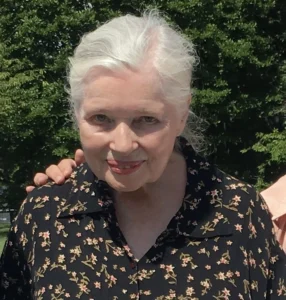
“I had the amazing honor and pleasure of working with two of the most dedicated animal protectionists ever, Cleveland Amory and Marian Probst,” said Mr. Regenstein, still active in animal protection work from his home in Atlanta. “I learned early on that Marian wasn’t just the person who ran The Fund—in many ways, she was The Fund. She was fiercely committed to advancing the mission of the Fund, to its team, its members, and most of all, to Cleveland, who tirelessly and courageously called it as he saw it. They were equal partners in the cause of protecting animals, even though only Cleveland was the publicly visible presence.”
Along with Amory, Probst was a mentor to the next generation of animal advocates, including Regenstein and also Patricia Forkan, who had also served as an executive at The Fund and would migrate to the role of executive vice president of the Humane Society of the United States and launch its international work and trade-related work. Paul Watson, founder of the Sea Shepherd Conservation Society, would go on to lead the global anti-whaling movement, with the intrepid actions of his fleet to block the maneuvers of whaling ships. The Fund made a major gift to Watson’s group to bring the Cleveland Amory into his animal-welfare armada. Amory and Probst had a legion of “field representatives” who would carry on this work in the states, including Virginia Handley, who did the essential legal groundwork for animal welfare that would make California a national standard-setter in public policies to shield animals from cruelty.
The Ballot or the Bullet
When I came to The Fund in 1989, after Regenstein and Forkan had left, Amory and Probst named me its national director. I started work on Proposition 117 in California to end the trophy hunting of mountain lions in California. The Fund’s win in California that year stirred my interest in doing more ballot measures to break the grip of the farm and hunting lobbies in state legislatures that had stalled popular reforms. With the support of Probst and Amory, we then launched a Colorado ballot measure in 1992 to ban spring hunting of bears and any bear baiting or hounding, and that measure won in a landslide.
Those two campaigns in Western states showed that animal protection principles could prevail at the ballot box. So we organized a wave of dozens of other ballot measures in the animal protection movement, spearheaded by The Fund and then by HSUS over the next three decades. The ballot measure became our most high-impact tool for combating factory farming, wildlife management abuses, animal fighting, and other pervasive and systemic forms of animal abuse. The Fund’s forays into this domain of policy-making are an enduring legacy, with the plebiscites proving the thesis that Americans care about animals and want them treated better. Our ballot measures laid the groundwork for many of the most important federal and state policies for animals and corporate reform efforts that would come again and again in the first two decades of the 21st century.
While protective of their organization, Amory and Probst were quick to collaborate with groups and individuals doing other crucial work. They were close friends with Brian Davies of the International Fund for Animal Welfare and joined in his efforts to halt the shooting and clubbing of harped and hooded seals on the ice floes in eastern Canada. Probst and Amory also collaborated with Ingrid Newkirk and Alex Pacheco after they founded PETA in 1981. The organizations gained operational control of the New England Anti-Vivisection Society in the 1980s, motivated by their concern that it had grown passive and was not spending its considerable resources to make the public case against animal testing.
In 2005, some years after I left the Fund, and after Amory’s death seven years earlier, Marian Probst, as board chair of The Fund, helped engineer a rare non-profit merger. She and HSUS board chair David Wiebers, M.D., moved forward with the union of the two groups. That merging of these two forces – supported also by me as HSUS CEO and The Fund’s president Michael Markarian — proved to be a catalyst for major reforms in many domains of animal protection work, and it could not have happened without Probst, who again put the cause ahead of any notion of organizational vanity.
“Marian possesses a wonderful soul and she was loved by all and did so much to make the world a better place for nonhuman as well as human beings,” said Wiebers, who welcomed Probst onto the board of directors of HSUS and the Humane Society Legislative Fund, which he and I had worked to form in 2005. “Her impact will be felt long into the future and we celebrate her life while at the same time feeling a profound sense of loss. She will forever be a cherished icon in the field of animal protection.”
“I have so many memories of Marian, but one from 1998 has always stayed with me,” said Paul Shapiro, who started his career at The Fund. “When I was a young receptionist at The Fund for Animals, Cleveland Amory—ever playful and theatrical—floated the idea of a prank to prompt a quicker callback from Heidi Prescott, asking me to tell her he’d had a heart attack. I was uneasy about lying, and before I could do anything, Marian quietly called me from another room and told me I didn’t need to do it, and that she would take care of things herself. It was a small moment, but it captured Marian perfectly: thoughtful, protective, and guided by an instinctive kindness.”
John Mackey, the founder of Whole Foods Market, also had a special touch with Marian. “I had the honor of serving with Marian Probst for many years on the HSUS board of directors. Marian was a deeply caring person who helped lessen animal suffering across the world. She will be greatly missed.”
Muriel Van Housen, chair of the board of the Center for a Humane Economy, offered a tribute to Probst. “It was remarkable to have someone on the board of directors with her vast experience and perspective, having been at the forefront of animal protection work starting in the 1960s,” she said. “With the Center, she worked to help animals right until the end, and our organization will forever remember her service and her deeply caring instincts.”
Marian is survived by her niece Marian Crandall and nephew Louis Crandall. The lives of her colleagues, family and friends, and uncounted animals were better for the influence of this gracious and remarkable woman.