Proposition 12: Economic Impacts on Farmers, Consumers, and the Pork Industry
Evidence from the first years of implementation offers a clearer picture of the law’s effects on production, pricing, market access, and industry consolidation.
By Galina Hale, Ph.D.
This article was originally published by the All Life Institute, a global thinktank based in Washington D.C. that is uniquely dedicated to protecting and enhancing all life on this planet.
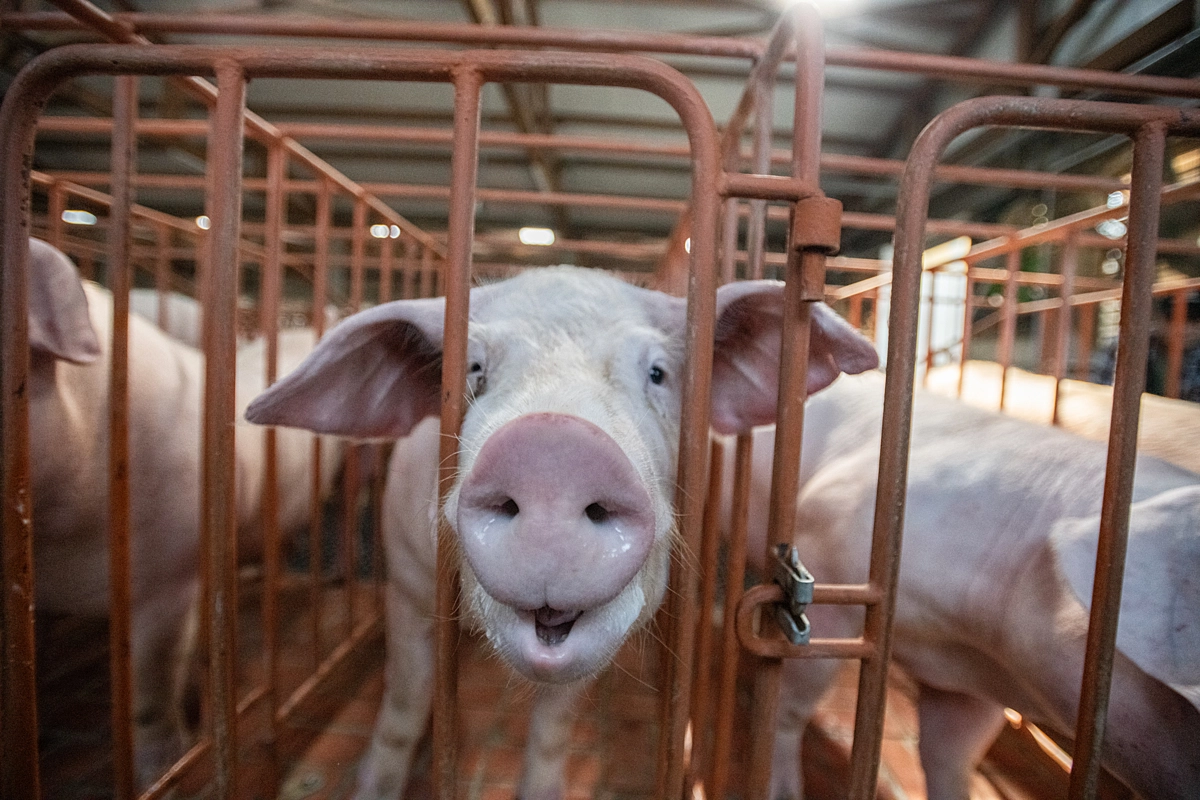
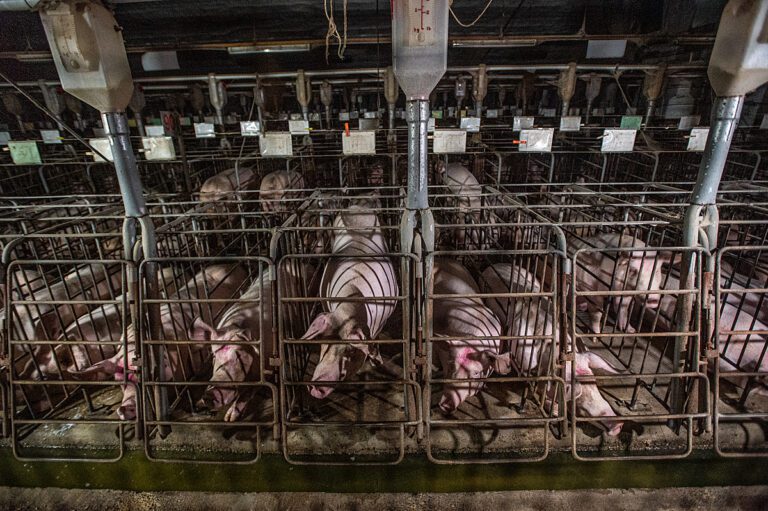
In November 2018, voters in the state of California passed, with 62.7% of the vote, Proposition 12, which bans the sale in California of eggs, veal, and whole uncooked pork from animals confined below minimum space standards, no matter where the animals were raised. For breeding pigs, this means at least 24 square feet per sow and no gestation crates [1, 2]. Its pork provisions were set to take effect on Jan. 1, 2022, but a state court delayed enforcement until July 1, 2023 (with full enforcement from Jan. 1, 2024). Even before that, it was challenged in federal court in December 2019 by the National Pork Producers Council (NPPC) and the American Farm Bureau Federation on the basis that it violated the dormant Commerce Clause of the U.S. Constitution by regulating farming beyond California’s borders [3].
The U.S. Supreme Court decided to hear the case after a U.S. District Court and a U.S. appeals court rejected the claims of NPPC and its co-plaintiffs. In May 2023, the Court ruled on behalf of the State of California [4]. In a plain misreading of the rulings, the NPPC and its allies have claimed that the Court told Congress to fix Prop 12. On that point, the court said that the NPPC and other Prop 12 opponents are “free to petition Congress to intervene” [4], as any interest group is. In 2025, the Supreme Court also declined to hear a follow-up challenge brought by the Iowa Pork Producers Association [5].
What were the alleged issues, and why is Prop 12 so controversial, particularly among pork conglomerates and the bodies that represent them?
Before we dive into the details, let’s focus on the pork portion of Prop 12. California produces less than 1% of the pork it consumes (by the industry’s own count, 99.87% of the pork eaten in California comes from hogs born outside the state) [6] and therefore the NPPC saw this as an opportunity to challenge Prop 12 based on its potential effects on other states.
Now let’s get to some business and economic motives of the NPPC and the industry it represents. The pork industry has been undergoing a rapid concentration. The four largest packers processed 34% of U.S. hogs in 1980 but 67% by 2019 [7]. On the farm side, the number of farms with hogs fell by 13% between 2017 and 2022 alone, to about 56,000, while operations with 5,000 or more hogs now hold 75% of the national inventory, up from 53% in 2002 [8]. Large concentration allows for a larger production scale, thereby lowering costs of production. However, the economies of scale critically rely on uniform output and a streamlined supply chain. Thus, setting aside the impact of Prop 12 on the at-the-farm production costs, it creates heterogeneity of the product across states, thus putting a limit on how large the scale of production can grow.
Is this heterogeneity good or bad? Well, it is bad if you want to increase the market power of large producers, which can lead to lower production costs without affecting consumer prices, thus increasing profit margins. So, it is bad for the shareholders and executives of these companies. But it is not necessarily bad for consumers because these cost savings are not going to be necessarily passed on to consumers. Farmers today receive only about 24 cents of each retail pork dollar [9], down from 44–50 cents in the early-to-mid 1980s, before the industry consolidated [30], compared with more than half of each retail beef dollar [10].
Now, who are “these companies”? The largest U.S. pork packers are Smithfield Foods (about 25% of U.S. pork packing), JBS USA (about 18%), and Tyson Foods (about 16%), followed by Clemens, Hormel, Seaboard/Triumph and others [13]. Two of the three are owned by foreign parent companies: Smithfield by WH Group of China and JBS USA by Brazil-based JBS S.A. [10, 15].
It is somewhat ironic, then, that then-NPPC President Lori Stevermer complains that “California Proposition 12 reaches far beyond California to include farmers in other states – and even other countries” [14]. Even Smithfield, the most vertically integrated of the packers, now plans to raise on its own farms only enough hogs to cover about 30% of its fresh pork needs [15]. The rest is supplied by independent farmers and contract growers that do not have much of market power.
Nationally, about 40% of market hogs were packer-owned in 2023, and 52% of U.S. hog inventory was raised under production contracts [16], in which the grower is paid a fee per animal or per pig space rather than a market price for the hogs. When the industry is more concentrated, the buyers of the product have more market power than the producers, because producers may have limited choice about whom they can sell their products to. So, what is the impact of Prop 12 on the farmers who raise pigs?
A friend of mine who is raising pigs on the East Coast said that it cost him about a one-time investment of about $3,000 per sow to convert his farm to Prop 12 compliance. That is below the $3,500–$4,500 per sow that the industry and Agriculture Secretary Brooke Rollins cite [17]. A prominent Pennsylvania farmer who converted his barns, Brent Hershey, estimates that once spread over the 20-year life of a building, the cost adds only 1%–2% to production costs [18]. Moreover, with more space and no gestational confinement, my friend’s sows started to produce more piglets per litter. Thus, over time, the conversion cost paid for itself. In addition, farmers are able to receive a higher price for their hogs when they are Prop 12-compliant: USDA economists estimate the price premium at about $5.50 per hundredweight on average in the first months of enforcement, roughly 7%-8% above the base hog price, ranging between $5 and $7 [19].
Another friend built a whole new farm in Missouri, making a large investment to construct a new Prop 12-compliant facility. They did that because they were not able to make a profit producing conventional pork, given the prices the buyers were offering them. Even accounting for the construction costs, they are making more money on Prop 12-compliant pork because they are able to sell it at a higher price. Another friend has a free-range farm in South Carolina, automatically compliant with Prop 12. During the early months of COVID-19, when supply chains broke down, they were the main source of animal products in their town. They like Prop 12 because it allows them to sell their products at higher prices that recognize their premium quality and better treatment of animals.
Importantly, no farmers were forced to convert to compliant farming, contrary to the claim of the NPPC and allies that Prop 12 tells farmers how to farm. About 27% of U.S. producers have made or are pursuing investments to comply [17]; most have not. California accounts for only about 8%–9% of U.S. retail pork purchases [20], and supplying it requires only about 8–9% of North American sows [21]. Pork industry representatives have acknowledged that production has adjusted sufficiently to meet Prop 12 demand without requiring other farmers to convert. Farmers who did not see conversion as profitable to them, did not have to convert and could continue selling at the volumes they had before, to be distributed in other states. Indeed, U.S. commercial pork production did not shrink: it reached 27.8 billion pounds in 2024, the first year of full enforcement, and was forecast to grow further in 2025 [22].
There was no shortage, but prices did go up in California. USDA economists found that prices of pork products covered by Prop 12 in California were on average about 26% higher after July 2023 than before Prop 12 enforcement began, ranging from 17% for ribs to 47% for pork loin [21], and industry scanner data show them still about 20% above pre-Prop 12 levels in mid-2025 [17].
This seems like a lot, but can it be attributed to Prop 12? Given that we had inflation across the country and all goods in recent years, we need something to compare it to. Let’s compare it to beef. Over the same time period, price of beef in California increased by 26-29% [BLS].
So, there was a relative increase in pork prices in California, and Californians bought about 21% less of the covered cuts [20], but it was not out of line with what happened to other meats. Three years after enforcement began, there was no market disruption, and, most importantly, there was no surprise for California voters. The official 2018 voter guide warned that Prop 12 would likely increase prices for eggs, pork, and veal [2], yet California voters, by a margin of 25 percentage points (about 3 million votes), showed that they are willing to pay extra for a more humane treatment of animals [1].
What about other states? If less pork is sold in California because it has become more expensive, it means more pork is available for other states, compliant or not. This would lead to lower, not higher prices for consumers. In fact, nationwide, pork prices increased by much less than beef prices: less than 7% versus about 30% since June 2023 [24], and USDA forecasts pork prices to rise less than 1% in 2026, compared with nearly 10% for beef [26].
While the pork industry is the one that has made California’s Prop 12 a subject of national news, the provisions of the initiative were not limited to pork products. Responding to the ban on extreme confinement and overall consumer demand trends, other animal-agriculture sectors have also been transitioning toward less restrictive housing, with half of U.S. egg production now cage-free, compared to just 9.6% in 2012, and the veal industry having moved its members to group housing. Notably, the egg and veal industries have not joined the pork industry’s repeatedly unsuccessful efforts to overturn Prop 12.
Bottom line, consumers should have a right to have a say in how their food is produced. State laws and regulations, as a matter of democratic action, should reflect consumers’ preferences. It is very important that states have these rights. In fact, heterogeneity of rules across states (the “patchwork”) is actually keeping industrial organization of the supply chain healthy and competitive, not monopolized by a small number of very large producers. Small businesses are and always have been the engine of economic growth and they don’t need subsidies or handouts from the government, but they do need antitrust protections to stop the anticompetitive practices of multinational conglomerates. Every small firm starts with addressing a niche market and some grow to become global giants, but most don’t. Prop12 slows down the concentration of pork production in the U.S. and it has potential to reduce profit growth for a handful of companies, but it benefits small farmers, consumers, small and large companies, and of course animals.
Consumers should have a right to have a say in how their food is produced. State laws and regulations, as a matter of democratic action, should reflect consumers’ preferences.
Sources
[1] 2018 California Proposition 12 (election results from the California Secretary of State Statement of Vote). https://en.wikipedia.org/wiki/2018_California_Proposition_12
[2] California Legislative Analyst’s Office, Proposition 12 analysis (2018 voter guide). https://lao.ca.gov/BallotAnalysis/Proposition?number=12&year=2018
[3] National Agricultural Law Center, “What Is Going On With Prop 12?”. https://nationalaglawcenter.org/what-is-going-on-with-Prop 12/
[4] National Pork Producers Council v. Ross, 598 U.S. 356 (2023). https://supreme.justia.com/cases/federal/us/598/21-468/
[5] SCOTUSblog, Iowa Pork Producers Association v. Bonta (No. 24-728). https://www.scotusblog.com/cases/iowa-pork-producers-association-v-bonta/
[6] Brief for Petitioners, NPPC v. Ross, No. 21-468 (June 2022), p. 8. https://www.supremecourt.gov/DocketPDF/21/21-468/227679/20220610132221228_Natl%20Pork%20Producers%20v%20Ross%20No.%2021-468%20Brief%20for%20Petitioners.pdf
[7] USDA ERS, “Four largest U.S. meatpackers’ share of cattle and hog purchases surged after 1980” (2024). https://www.ers.usda.gov/data-products/chart-gallery/chart-detail?chartId=108341
[8] USDA NASS, 2022 Census of Agriculture Highlights: Hogs and Pigs (2024). https://www.nass.usda.gov/Publications/Highlights/2024/Census22_HL_Hogs_Pigs.pdf
[9] USDA ERS, Meat Price Spreads (farmers’ share of retail pork dollar, 2026). https://www.ers.usda.gov/data-products/meat-price-spreads
[10] Feigin, Keen, and Pool, “Rebranded EATS Act Eliminates Nation’s Most Important Farm Animal Welfare Laws,” Animal Wellness Action (2026). https://animalwellnessaction.org/wp-content/uploads/2026/04/Rebranded-EATS_Act_Report-042026.pdf
[11] Hagens Berman, In re Pork Antitrust Litigation (settlements to date). https://www.hbsslaw.com/cases/pork-antitrust
[12] Sen. Chuck Grassley, “Prop 12 Is a Hogwash, Government-Knows-Best Approach” (March 2026). https://www.grassley.senate.gov/news/commentary/Prop 12-is-a-hogwash-government-knows-best-approach
[13] Bolotova, “Is There Price Fixing in the U.S. Pork Industry?” Choices (2024). https://www.choicesmagazine.org/choices-magazine/submitted-articles/is-there-price-fixing-in-the-us-pork-industry
[14] National Hog Farmer, “NPPC urges House Agriculture Committee to address Prop 12 in farm bill” (March 4, 2025). https://www.nationalhogfarmer.com/farm-policy-news/nppc-urges-house-agriculture-committee-to-address-Prop 12-in-farm-bill
[15] Food Dive, “Smithfield sells off pigs as attention turns toward lunch meats” (2025). https://www.fooddive.com/news/smithfield-sells-pigs-lunch-deli-meat/744205/
[16] Schulz, “Pork industry structural changes possible,” Iowa State Ag Decision Maker (Oct. 2023). https://www.extension.iastate.edu/agdm/articles/schulz/SchOct23.html
[17] Farm Policy News, “California’s Prop 12 Increased Pork Prices, USDA Data Says” (July 2025). https://farmpolicynews.illinois.edu/2025/07/californias-Prop 12-increased-pork-prices-usda-data-says/
[18] Meatingplace, “‘We Know We’ll Be Paid a Premium’: Prop 12 Supporters” (Oct. 2025). https://meatingplace.com/we-know-well-be-paid-a-premium-Prop 12-supporters/
[19] Hawkins, Arita, and Meyer, “Proposition 12 Reported Compliant Volumes and Wholesale and Non-Carcass Premiums,” ARE Update 27(3) (2024). https://s.giannini.ucop.edu/uploads/pub/2024/03/16/v27n3_3.pdf
[20] Lwin, Cooper, Meyer, and Steinbach, “California Pork Market Responds to Proposition 12 with Higher Prices and Lower Consumption,” NDSU Agricultural Risk Policy Center (2025). https://www.arpc-ndsu.com/post/california-pork-market-responds-to-proposition-12-with-higher-prices-and-lower-consumption
[21] Hawkins, Arita, and Meyer, “Proposition 12 Pork Retail Price Impacts on California Consumers,” ARE Update 27(3) (2024). https://s.giannini.ucop.edu/uploads/pub/2024/03/16/v27n3_2.pdf
[22] USDA, Livestock and Poultry Outlook, Agricultural Outlook Forum (Feb. 2025). https://www.usda.gov/sites/default/files/documents/2025AOF-livestock-poultry-outlook.pdf
[23] Pork Business, “Prop 12 Impact: Pork Prices Surge 20% as Producers Push for Farm Bill Solution” (April 16, 2026). https://www.porkbusiness.com/news/industry/Prop 12-impact-pork-prices-surge-20-producers-push-farm-bill-solution
[24] U.S. Bureau of Labor Statistics, CPI-U, pork (CUUR0000SEFD) and beef and veal (CUUR0000SEFC), via YCharts. https://ycharts.com/indicators/us_consumer_price_index_pork_nsa
[25] House Committee on Agriculture (July 2025). https://agriculture.house.gov/news/documentsingle.aspx?DocumentID=7991
[26] USDA ERS, Food Price Outlook: Summary Findings (2026). https://www.ers.usda.gov/data-products/food-price-outlook/summary-findings
[27] Brent Johnson, “Opinion: Prop 12 hurts Iowa’s farm families,” Agri-Pulse (July 2026). https://www.agri-pulse.com/articles/24961-opinion-Prop 12-hurts-iowas-farm-families
[28] Triumph Foods, LLC v. Campbell (1st Cir. 2024). https://www.courtlistener.com/opinion/10690423/triumph-foods-llc-v-campbell/
[29] Ha, “Proposition 12 and U.S. Pork,” U.S. International Trade Commission Executive Briefing (May 2023). https://www.usitc.gov/publications/332/executive_briefings/ebot_proposition_12_and_us_pork_industry.pdf
[30] USDA ERS, Food Cost Review, 1950–97, Agricultural Economic Report 780, Table 9 (p. 35). https://ers.usda.gov/sites/default/files/_laserfiche/publications/41035/15334_aer780h_1_.pdf
Galina Hale is a professor of economics at UC Santa Cruz, where she is faculty director of the Institute for Social Transformation and co-director of the Center for Analytical Finance. She is also a research associate at the National Bureau of Economic Research, a research fellow at the Centre for Economic Policy Research, and director of the International Finance and Macroeconomics Program at the Central Bank Research Association. Previously, she served as a research adviser at the Federal Reserve Bank of San Francisco and taught economics at Yale University. Her research spans international finance, climate-related financial risks, sustainable food systems, capital flows, and financial crises, and she has published extensively in leading economics and finance journals.