

Incident involving a discarded monkey during quarantine highlights systemic failures, public health risks, and urgent need to modernize research
Washington, D.C. — The Center for a Humane Economy and Animal Wellness Action today condemned a second federal citation issued to a Florida-based primate import and quarantine facility, where a monkey was mistakenly discarded into a waste container, transported off-site, and later euthanized.
The incident occurred at a BC US LLC facility in Immokalee, Florida, that had already received a prior critical citation after two monkeys died from extreme heat exposure. The latest violation involved an imported nonhuman primate who should have been under strict quarantine and monitoring following international transport.
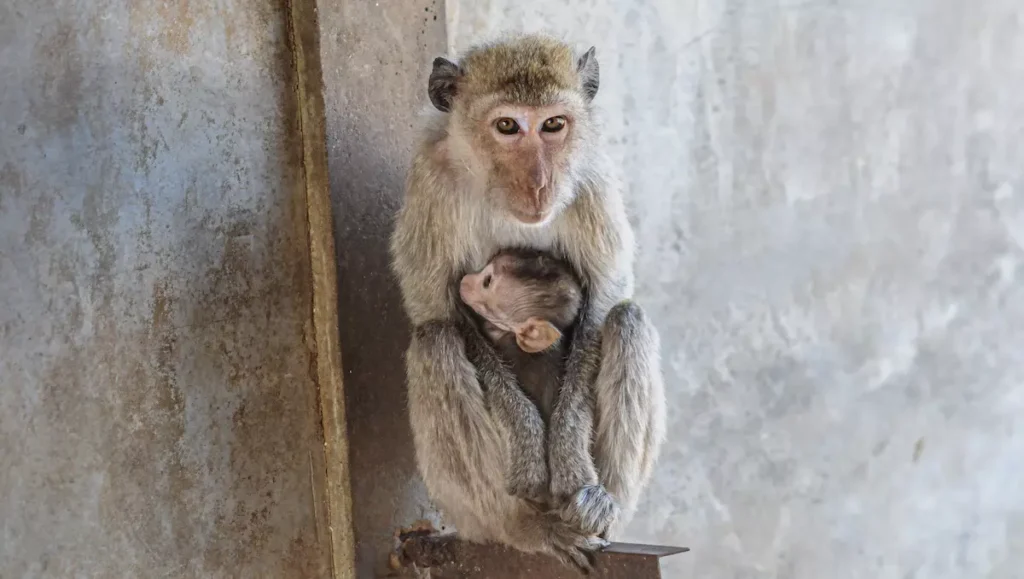
This episode is not an isolated error, but a stark illustration of systemic failures in the U.S. primate import pipeline.
“This is not just a tragic mistake—it is a warning sign about a system that is fundamentally broken,” said Tamara Drake, director of research and regulatory policy at the Center for a Humane Economy. “We are importing primates from overseas, placing them into high-stress quarantine environments, and then seeing preventable failures that result in suffering, death, and biosecurity risks. This incident raises serious questions about whether this pipeline is defensible at all.”
Federal regulations require imported primates to undergo quarantine due to the risk of zoonotic disease transmission. The mishandling of an animal during this critical containment period underscores broader concerns about oversight, compliance, and public health protections.
“The U.S. primate import system is under strain from every angle—animal welfare, disease risk, and supply chain integrity,” said Wayne Pacelle, president of the Center for a Humane Economy and Animal Wellness Action. “When a monkey can effectively disappear into the medical waste stream during federally mandated quarantine, it demonstrates a level of dysfunction that should prompt immediate federal review.”
The organizations noted that the United States continues to rely on imported primates for biomedical research despite growing scientific consensus that animal models—particularly nonhuman primates—often fail to predict human outcomes.
“Advances in modern science are rapidly making animal testing obsolete, particularly for complex human diseases where primate models routinely mislead researchers,” said Dr. Zaher Nahle, senior scientific advisor for Animal Wellness Action and the Center for a Humane Economy. “Human-based methods—such as organoids, organ-on-chip systems, and computational modeling—offer more predictive, ethical, and scalable alternatives. Incidents like this should accelerate the transition away from imported primates and toward 21st-century science.”
The groups are calling for:
- A federal investigation into the Florida facility and similar primate import operations
- A review by the CDC and HHS of the current primate quarantine and import system
- A ban on primate imports in favor of human-relevant research methods
“This is a moment for accountability and course correction,” Drake said. “We should not be sustaining a system that is risky, unreliable, and increasingly unnecessary.”