Staged Animal Fighting Threatens Hunters and Environmentalists
Humane advocates, egg and poultry farmers, and law enforcement officials need help in shutting down the animal fighting industry. It’s time for the hunting and environmental communities to step up.
by Ted Williams
Staged animal fights, in which dogs and roosters are bred and trained to tear each other to shreds for entertainment and gambling, are felonies in all 50 states, the District of Columbia, and all U.S. territories. Yet they persist underground on an eye-popping scale, largely undeterred.
Despite their felony status, animal-fighting enterprises have evolved into sophisticated, multi-jurisdictional criminal networks. They are often tied to illegal gambling rings, narcotics trafficking, firearms violations, and other forms of organized crime. Law-enforcement agencies report that investigations are resource-intensive, surveillance is difficult, and prosecutions are hindered by gaps in federal law—particularly where online betting, interstate transport of fighting animals, and property seizure authorities are concerned. These structural deficiencies have allowed the crime to modernize faster than the statutes designed to stop it.
One example of this disparity is online wagering. The internet has revolutionized communications and commerce among animal-fight observers and gamblers. Bettors don’t even have to be in the same state now. They can watch and bet on animal fights on live-stream videos, no matter where in the world they take place. The FIGHT Act would, among other things, end this form of high-stakes gambling.
With that enforcement reality as backdrop, lawmakers in both chambers have advanced federal legislation intended to close those gaps. The FIGHT Act — H.R. 3946, introduced by Reps. Don Bacon, R-Neb., and Andrea Salinas, D-Ore., and S. 1454, led by Senators John Kennedy, R-La., and Cory Booker, D-N.J. — would amend the Animal Welfare Act to strengthen federal authorities in four principal ways: prohibiting in-person and online gambling on animal fights; banning shipment of mature roosters through the U.S. mail; authorizing citizen suits against sponsors and participants; and enabling forfeiture of animals and property used in animal-fighting crimes.
“It’s disgusting and inhumane that people profit off the cruel practice of forcing animals to fight for their lives,” says Rep. Bacon. “The FIGHT Act will embolden law enforcement to stop this inhumane and cruel animal abuse. I am thankful to Rep. Salinas for joining me on this legislation.”
A broad, informal coalition of supporters has rallied around the FIGHT Act. At this writing, 1,060 groups endorse it. They consist of egg and poultry farmers panicked about losses of their birds from avian diseases spread by trafficked fowl, law-enforcement agencies and offices stressed and overextended by dealing with the crime tsunami associated with animal fighting, and organizations like Animal Wellness Action and the Center for a Humane Economy that advocate for humane treatment of animals.
Conspicuously absent are hunting and some environmental outfits, though many local Audubon societies understand what’s at stake here. Animal fighting is a humane issue, but it’s also a threat to wild game (both birds and mammals), nongame birds and mammals, upland bird dogs, and waterfowl-retrieving dogs. More on all that directly. But first, the humane issue for hunters.
Hunters and Our Dogs
As a lifelong woodcock hunter who has raised, loved, and trained five Brittany spaniels from puppyhood, I lack words to describe the bond between upland bird hunters and their pointers and flushers or the bond between waterfowl hunters and their retrievers. Maybe outdoor writer Frank Woolner came close with “almost a pagan rapport.”
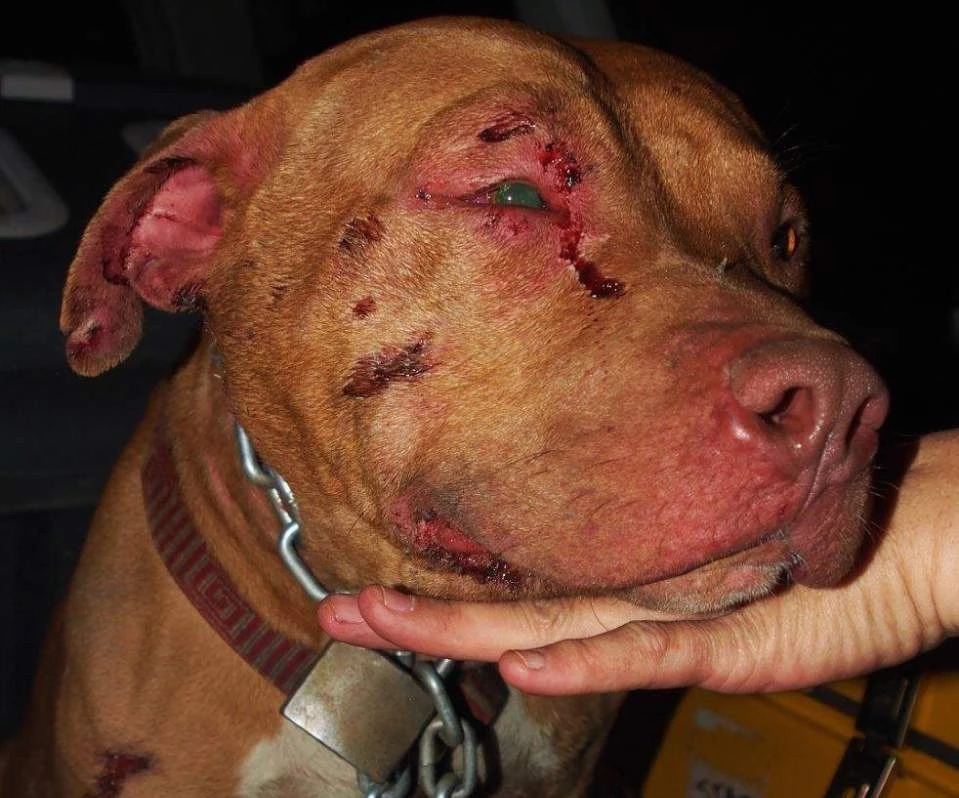
So the horrific cruelty of dogfighting hits us in the gut. Fighting dogs are ripped apart, eyes torn out, teeth split and snapped off, bone pieces, tendons and organs protruding from severed flesh. You can see some graphic photos of the injuries here.
Prior to his indictment, Kevin Warren of River Rouge, Michigan, used messaging application WhatsApp to share videos of dogfighting, including one in which he whooped it up for his fighting dog “Barracuda,” extoling him as “a straight finisher, throat and kidneys.” In April 2023, Warren was sentenced to two years’ probation during which he was barred from owning dogs, required to receive “cognitive behavioral therapy,” and ordered to pay $1,580 in restitution to the Michigan Humane Society.
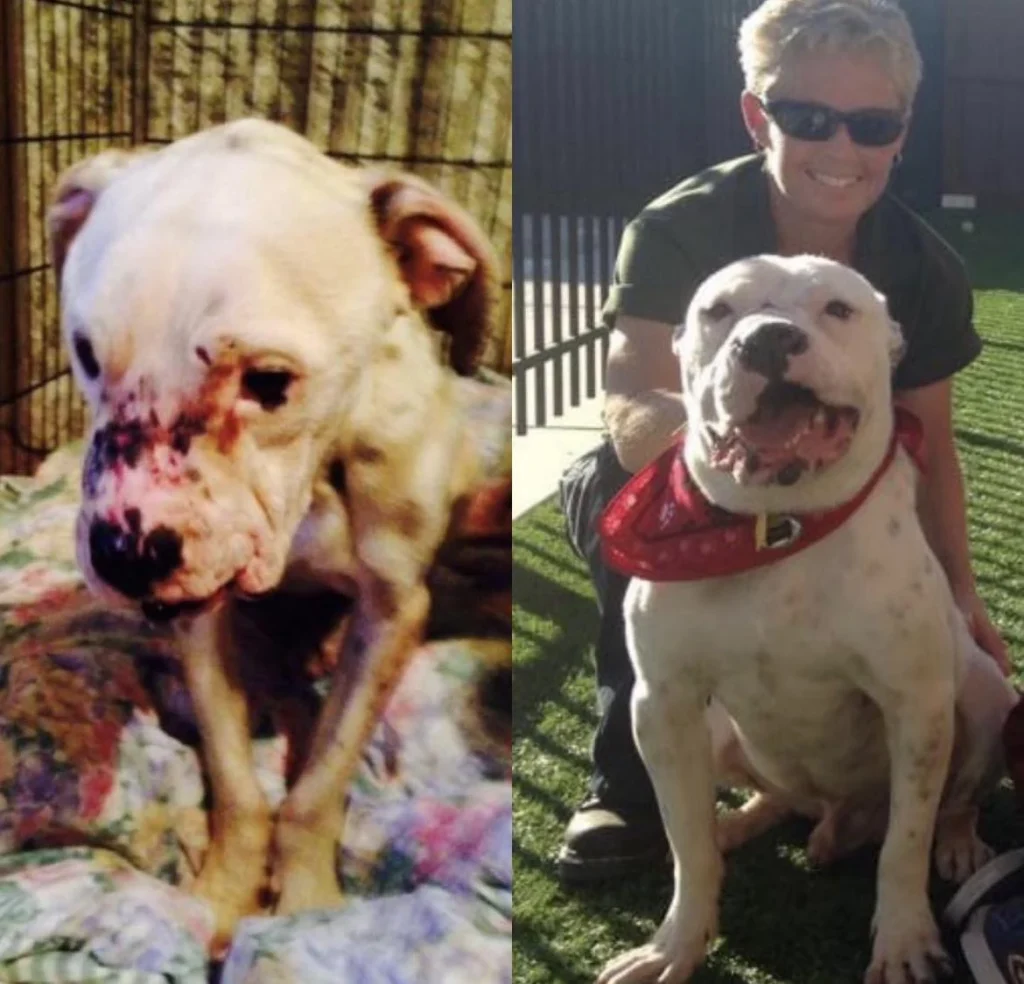
Left: Huey, an American Staffordshire terrier, with injuries sustained in a dogfighting tournament. Right: Huey after rehabbing by the Saving Huey Foundation.
Photo courtesy of Saving Huey Foundation.
Fighting dogs are chained for life in isolation, filth, and extreme temperatures. They’re pumped full of anabolic steroids to enhance muscle mass and aggressiveness. Vet care is out of the question, because state laws require medical specialists to report acts of cruelty by pet owners. And the perpetrators themselves are desensitized to the suffering of dogs. Defeated dogs are shot, electrocuted, clubbed to death, or dumped into the wild where they die slowly or heal and become feral, preying on game and nongame animals and competing with native predators.
When a female dog declines to be bred, she’s strapped body and head to a “rape stand.” “Parting sticks” are employed to pry open dogs’ mouths during combat.
It’s not just fighting dogs that are victimized. It’s pet dogs, too — our hunting dogs included. They are stolen and used as “bait animals” to train fighting dogs to maul and kill. Wild mammals are trapped and used for the same purpose. Impromptu “street fighting,” in which stolen dogs are forced to fight, is the fastest-growing type of dogfighting.
Because fighting dogs are kept in unsanitary conditions and lack vet care, they are riddled with parasites and pathogens. As a result, wildlife, including game and nongame birds and mammals, sicken or die, especially when defeated dogs are abandoned in the wild.
Humans are also sickened or killed by some of the parasites and pathogens spread by the fighting-dog industry — rabies, salmonellosis, leptospirosis, campylobacteriosis, scabies, giardiasis, ringworm, hookworms, tapeworms, toxocariasis, brucellosis, and antibiotic-resistant staph infections, to mention just a few.
Wanton abuse of “man’s best friend” riles the American public. Recall the outrage in 2007, when law-enforcement agents recovered 54 fighting dogs (American pit bull terriers) from the Virginia ranch of Atlanta Falcons quarterback Michael Vick, then the highest-paid football player in the NFL. Many of these dogs had sustained brutal fighting injuries.
The bust was coincident with the passage of the Animal Fighting Prohibition Enforcement Act the same year, which amended the Animal Welfare Act by elevating dogfighting and cockfighting to felonies. Vick and co-defendants, who had used Vick’s ranch for raising fighting dogs and dogfighting tournaments, ultimately pleaded guilty to felony charges under the Travel Act. Vick was jailed for 23 months.
And recall the outrage elicited by Homeland Security Secretary Kristi Noem when she revealed she had shot her puppy, Cricket, for “disobedience,” as if obedience is a natural trait of puppies.
Ethical hunters are committed to quick kills. That’s a big part of why we use dogs for upland birds and waterfowl. We hate to see wounded birds linger, and that includes fighting roosters.
Cockfighting Cruelty and Avian Disease
Just as brutal for the animals involved, cockfighting elicits less outrage from hunters and the general public than dogfighting. Janette Reever, a long-time animal fighting researcher, reports that people involved in dogfighting “are typically ashamed when they’re arrested because they know the community condemns their actions. People involved in cockfighting, in contrast, often strike a defiant tone, believing they’re carrying on a tradition and doing nothing wrong. Some legislators view cockfighting as a harmless part of the agriculture industry, and the fights can be seen as helping to fill hotels and boost the local economy.”
But what the hunting and environmental communities need to understand is that cockfighting kills game and nongame wild birds as well as game and nongame wild mammals.
To protect tethered roosters in their gamecock complexes, cockfighters routinely kill eagles, hawks, and owls. Roosters have natural spurs, but cockfighters extend them by attaching “gaffs” — i.e., curved spikes — to roosters’ legs. Gaffs are often fashioned from the claws of raptors that cockfighters kill and sometimes the shells of critically endangered hawksbill sea turtles that they illegally buy.
And there’s the disease threat. Under the guise of “breeding stock,” cockfighting fowl are shipped to the U.S. from Asian nations, especially Thailand and the Philippines, and from Latin American countries, especially Mexico.
There are mild and highly pathogenic forms of avian influenza (“bird flu”) and Newcastle disease. The highly pathogenic forms of both are rampant in the above countries, with the result that imported birds infect and kill domestic poultry along with our native gamebirds and nongame birds.
There is strict biosecurity at U.S. egg and poultry farms. There is little or none at foreign and domestic breeding facilities for fighting fowl. Roosters killed or badly wounded in cockfights are discarded in the wild, where they spread highly pathogenic bird flu and Newcastle disease.
The latter malady, fatal and highly contagious, spreads via feces, saliva, and nasal discharge. Symptoms include gasping, wheezing, coughing, green diarrhea, eye and beak discharge, tremors, leg and wing paralysis, lethargy, internal hemorrhaging, and death. The disease kills ducks, geese, wild turkeys, pheasants, partridges, and many other wild and captive birds.
Highly pathogenic bird flu is an even greater threat to biodiversity than virulent Newcastle disease, and not just to game and nongame birds. It also kills game and nongame mammals. But first, the threat to birds.
Bird Deaths
A nationwide panzootic (animal pandemic) of highly pathogenic bird flu that started in Indiana in 2022 has killed at least 185 million commercial and backyard captive birds (mostly chickens, turkeys, and ducks). The global outbreak started in Thailand with the trafficking of fighting birds.
Hunters should be aware that in 2022, the Wyoming Game and Fish Department had to “depopulate” (PR speak for euthanize) the 1,200-bird broodstock population at its Sheridan pheasant farm after suspected exposure to highly pathogenic bird flu
Texas and New York have had to depopulate entire pheasant farms for the same reason.
In 2022, Montana Fish, Wildlife and Parks insisted — against advice from independent wildlife biologists and national hunting organizations — in stocking pen-raised pheasants amid a highly pathogenic bird flu panzootic. The birds weren’t infected, at least at the time of stocking. Still, Backcountry Hunters and Anglers, Pheasants Forever, and Quail Forever condemned the stocking as a rash decision that prioritized short-term hunting opportunities over long-term ecological health
Hunters should also be aware that in 2023, highly pathogenic bird flu showed up at Martz’s Game Farm in Northumberland County, Pennsylvania. As a result, 100,000 pheasants had to be euthanized. And the state Game Commission saw fit to do an early release of the 4,000 broodstock pheasants it had purchased from nearby Mahantongo Game Farm.
Highly pathogenic bird flu has also been documented in such popular game species as wild turkeys, quail, Canada geese, mallards, wood ducks, and green-winged teal.
Although the United States has culled nearly 200 million domestic birds since 2022 because of infection by or exposure to highly pathogenic bird flu, the disease continues to rage through wild and domestic bird populations.
“Because of disease spread, last year we lost approximately six million birds to mandatory depopulation efforts [by the USDA],” wrote poultry farmer Marcus Rust of Rose Acre Farms in a piece for the Greenfield, Indiana, Daily Reporter. (Rust also touched on another widespread toxin associated with cockfighting — organized crime. “I work closely with poultry producers in Mexico, and they tell me that the cockfighting arenas south of the border are controlled by criminal cartels,” he wrote. “These operations are a menace to legitimate poultry production.”)
And this from a paper coauthored by veterinarian epidemiologist Jim Keen and former U.S. Army head veterinarian Colonel Tom Pool:
Both virulent Newcastle disease and pathogenic bird flu have major economic impacts on poultry production, so the consequences of virulent Newcastle disease and highly pathogenic bird flu introduction or dispersal from cockfighting activity can be enormous. Consumer poultry product prices (eggs, meat) must increase with the culling of millions of poultry as the birds and their products (meat, eggs) cannot be sold or eaten. Three large virulent Newcastle disease epidemics in southern California over the past 50 years, mainly driven by cockfighting, resulted in 16.2 million domestic bird deaths or culls, mostly commercial poultry, at a total cost exceeding $1 billion. The 2015 and current 2022 U.S. highly pathogenic bird flu outbreaks have caused the deaths of more than 100 million poultry (and counting) at a cost of several billion dollars.
Mammal Deaths
Highly pathogenic bird flu has recently spilled over to wild and domestic mammals — foxes, coyotes, bears, mountain lions, bobcats, Canada lynx, muskrats, skunks, raccoons, fishers, weasels, martens, minks, river otters, sea otters, bats, opossums, sea lions, dolphins, seals, pet dogs (including hunting dogs), feral and pet house cats, feral and domestic pigs, horses, cattle, domestic goats, domestic sheep, and such zoo animals as tigers and leopards.
The panzootic is leaving windrows of sea lion carcasses along the west coast of South America from Peru and Chile to the southern tip of Patagonia and up the east coast through Argentina, Uruguay, and Brazil.
Highly pathogenic bird flu has turned up in four seal species on the Antarctic Peninsula. Elephant seals suffer most. On South Georgia Island, drone surveys revealed a 47% decline in breeding females between 2022 and 2024. This was concurrent with the arrival of highly pathogenic bird flu.
Zoonotic Disease Risk to Hunters
Highly pathogenic bird flu and virulent Newcastle disease have even spilled over to humans. So the Centers for Disease Control and Prevention, the U.S. Department of Agriculture, the U.S. Fish and Wildlife Service, and state game and fish agencies warn hunters to: 1. Avoid handling dead birds or shooting birds that appear sick; 2. Dress game in well-ventilated areas or outdoors; 3. Wear disposable gloves, eye protection, and masks while cleaning game; 4. Avoid touching intestines; 5. Wash hands thoroughly with soap and water after handling birds, even if gloves have been worn; 6. Keep raw game separate from other foods; 7. Use soap and water and a 10% bleach solution to disinfect knives, tools, and dressing tables; 8. Disinfect vehicles and boots; 9. Monitor for fever, cough, sore throat, headache, or difficulty breathing; and 10. Contact a healthcare provider if symptoms develop after handling birds.
For too long, federal enforcement has lagged behind the evolution of organized animal fighting — particularly in the arenas of online gambling, interstate trafficking, and asset forfeiture. The FIGHT Act addresses these gaps directly, equipping investigators and prosecutors with authorities commensurate to the scale of the crime.
Hunters, conservationists, public-health officials, and humane advocates rarely find themselves on the same side of a policy fight. Here, they already are. Lawmakers should take note — and act.
Contact your legislators and urge passage of the FIGHT Act, H.R. 3946 and S. 1454.
Ted Williams, a lifelong hunter, is a former information officer for the Massachusetts Division of Fisheries and Wildlife. He serves on the Circle of Chiefs of the Outdoor Writers Association of America.
Photo: This victim of the dog-fighting industry was rescued by the Lee County (Florida) Sheriff’s Office, which maintains a special Animal Cruelty Task Force. Photo courtesy of Lee County Sheriff’s Office Animal Cruelty Task Force.