The War on Crows — and the Collapse of Hunting Ethics
From mass shoots to killing contests, a veteran hunter examines how the treatment of crows reveals a deeper moral failure in modern wildlife culture.
by Ted Williams
Bird hunting is one of my passions, so related and tangentially related articles trickle into my inbox from friends. Today, for example, I unearthed a piece from Wyoming’s Cowboy State Daily entitled, “Wyoming Crow Hunters Can Blast All They Want, But Nobody Eats The Birds.”
“There’s no bag limit,” reports the author, who then quotes Wyoming crow shooter Dan Kinneman as follows: “It’s a ball for hunting dogs, too. My yellow Labrador retriever, he doesn’t care whether it’s a crow or duck. In fact, he likes crow hunting more than duck hunting, because there’s more action.”
And on the FoxPro website, crow shooter Bob Aronsohn (watch his video) weighs in with this: “I shot 3,584 crows on the first 16 hunts of the season last year. This was from late October to mid-November. Then my friend, Dick Kilbane (from Ohio), and I shot an additional 6,932 crows from November to February. Our largest shoot last season was 543 crows in one day. We had several [days] over 400 and quite a few in the two and three hundred range.”
Not Hunting — Just Shooting
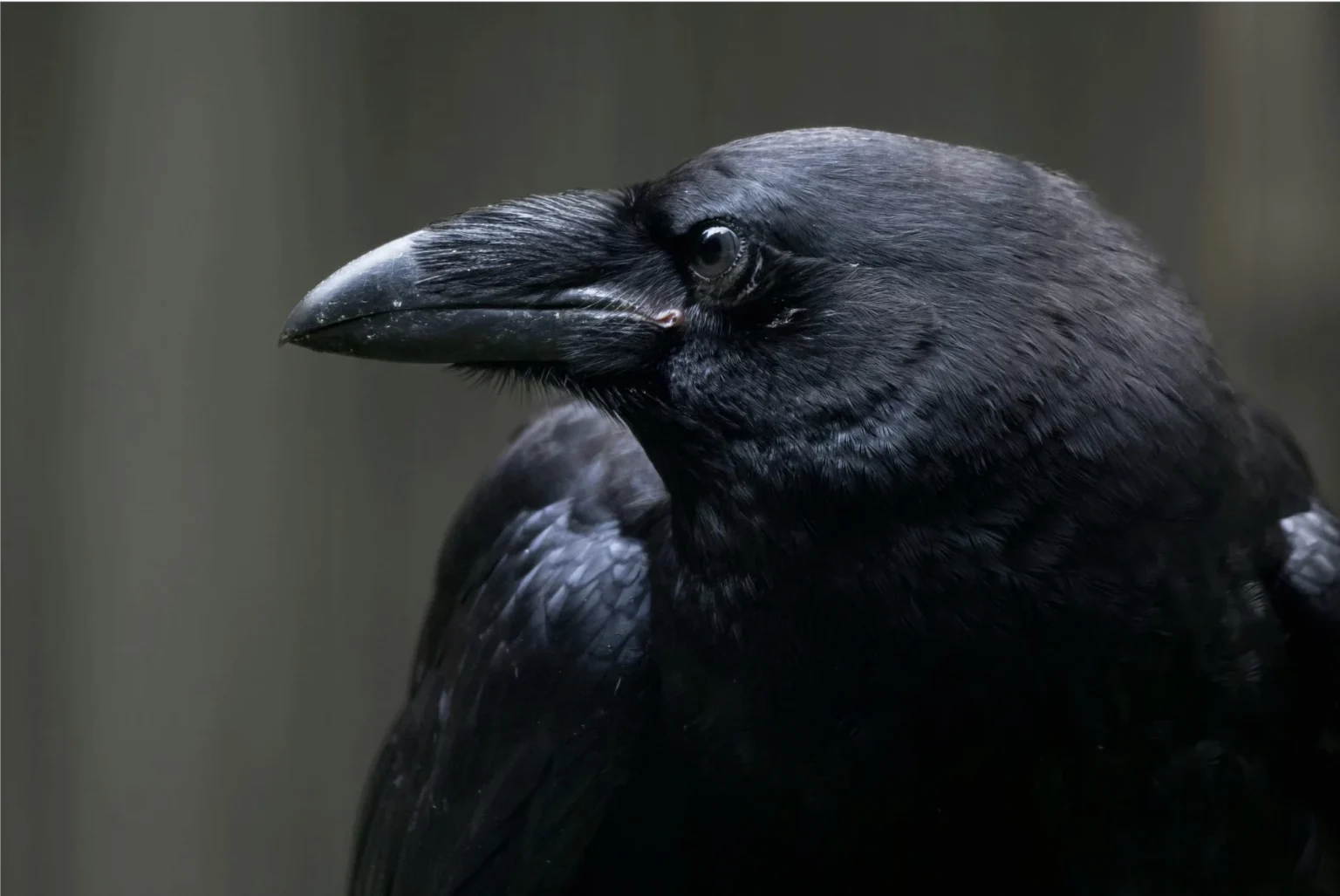
Crows and their cousins, magpies, jays, nutcrackers, and ravens, are far more intelligent than other birds. By way of full disclosure, I admit to a fondness for these corvids, crows especially.
This from a rare book I wrote called “Earth Almanac”: “When the yet-snowless woods are silent save for the rustle of southbound wings and brown leaves clutched by oak fingers, one tends to notice crows. Penciled on gray sky, strung out high and low, they scull purposefully to and from roosts at dusk and dawn. Most will be American crows, our biggest crow, which are seen almost everywhere in the nation. Mark their comings and goings and you may discover their winter roost. One important clue: The ground beneath will be littered with regurgitated pellets of compacted fur, hide, and bone.”
I use the term “crow shooter” because there are no “crow hunters.” All hunters shoot wildlife. But not all people who shoot wildlife are hunters. Hunters do not perceive and use crows as feathered skeet or coyotes, foxes, bobcats, prairie dogs, skunks, raccoons, and other so-called “varmints” as disposable targets. Hunters eat what they kill. They do not leave it to rot on or in the ground. The young son of a fair-chase hunter in my neighborhood shot a skunk. His father made him eat it, and he threw up — a valuable lesson.
Crows are protected under the Migratory Bird Treaty Act. But because they sometimes damage crops, a federal “depredation order” allows recreational shooting during seasons not to exceed 124 days per calendar year. And, unlike migratory waterfowl, crows can be shot legally with toxic lead pellets, which, when ingested, destroy organs, bones and nerves. So lead-riddled crow carcasses festooning the landscape kill all manner of avian and mammalian scavengers. A single No. 6 lead shotgun pellet (standard for crow shooters) is enough to fatally poison a bald or golden eagle.
Scott Darling of the Vermont Fish and Wildlife Department has it right when he reports that crow shooting has “no biological impact on the population.” But that’s not the point. I worry less about what crow shooting does to crow numbers than what it does to the reputation of my fellow fair-chase hunters, all of whom lament increasing anti-hunting sentiment but few of whom bestir themselves to condemn crow shooting or even wildlife-killing contests.
Crow-killing contests, in which hundreds of participants dispatch thousands of birds, then landfill them, are even more offensive than crow shooting by individuals. Crow-killing contests are legal and promoted in 39 states. They’re banned, along with all wildlife-killing contests, in Arizona, California, Colorado, Maryland, Massachusetts, New Mexico, New York, Oregon, Washington, and Vermont.
Darling also has it right when he says, “We do not support organized shoots like that simply because we think it sends the wrong message for our traditional hunting values. I think hunters need to be cautious about trying to create tallies of dead animals. We in the department always promote the respectful harvest and utilization of animals.”
The Migratory Bird Treaty Act prohibits recreational shooting of ravens. After years of persecution, they’re making a comeback in the East. But crow shooters, like almost everyone else, can’t tell a raven from a crow. When I walked into a taxidermy shop and congratulated the owner for his raven mount, he commented that in the decade it had been on display, I was the only person who hadn’t called his raven a “huge crow.” And those observers were viewing the raven from a distance of a few feet and when it was motionless, not when it was flying high and fast over a crow blind.
Crows can be legally shot in all states save Hawaii, where the endemic crow species, ʻalalā, is critically endangered. In most states, a hunting license is required. So game and fish agencies, funded largely by license dollars, promote crow shooting. When I worked as an information officer for the Massachusetts Division of Fisheries and Wildlife, I got bawled out by the director for informing the sporting public that crow shooting was “tarnishing its image.”
Crow shooters justify their sport with ancient bio-bullshit about how they make the world a better place by eliminating crows. “If you think about it from a conservation standpoint, crow hunting makes all the sense in the world,” asserts crow shooter Andrea Crider in Project Upland magazine. “Just like other predatory animals — think wolves, coyotes, bobcats, etc. — crows need to be managed in order for some game animals that we like to eat to thrive.”
And on a Bass Pro Shops page, Heath Wood offers this: “Several farmers will say that [crows] are a destructive animal, crows will dig seed out of the ground, will eat in farmers[’] cornfields, and the pecan trees in the southern states tend to be one of a crow’s favorite meals. If that is not enough of a reason to manage this bird, I found an interesting fact on crowbusters.com which is a[n] information site for crow hunters. It states that crows are known to affect the duck population, taking an average of 110 to 120 eggs off of the nest in one year. They will also attack baby ducks, bunnies, and squirrels. With all of these facts, it is easy to see why the crow population needs to be managed by hunters.”
A Century of Bad Science and Worse Incentives
Predators, our elders by millions of years, have never required humans to manage them. Predators manage themselves. Because humans have eliminated wolves and cougars from much of the nation, deer and elk overpopulate, razing forest understories, eradicating imperiled plants and habitats of mammals (theirs included) along with habitats of shrub- and ground-nesting birds. So deer and elk management by humans via regulated fair-chase hunting is appropriate, if not very effective. Game species compensate for mortality with fecundity. Predators cannot.
There has never been evidence to suggest that crows limit game or songbird populations or that shooting crows provides any real benefit to farmers other than psychological. But in the early 1900s, that fact didn’t impede DuPont, a major producer of shotgun ammo, from pumping out reams of propaganda in its magazine about the alleged evils of crows. “The record of the crow is like its coat — about as black as black can be,” began the first article of the series, in which C. O. Le Compte urged all sportsmen and all Americans to eradicate crows. “Crows,” he wrote, “destroy birds, birds destroy insects, insects destroy crops — therefore, kill the crows and save the crops.”
With that, DuPont announced that it was launching a “national crow shoot” for “the conservation of grain and the protection of game and insectivorous birds.” Participation, it proclaimed, would be an act of patriotism because crow eradication was sure to “prove an important factor in meeting America’s obligation to feed the world during these critical years [of World War I].”
Many states imposed bounties on crows. Some blew up roosts. Between 1934 and 1945, the Oklahoma Department of Wildlife Conservation killed an estimated 3.8 million crows with dynamite. The Illinois Department of Conservation killed 328,000 crows with a single blast. Texas and Kansas dynamited crows as well.
But even in 1918, the Bureau of Biological Survey was defending crows, noting that, while not guiltless, they consume insects and rodents that damage crops. “The verdict,” it reported, “is therefore rendered in favor of the crow, since, on the whole, the bird seems to do more good than harm.”
What Crows Actually Do for the World
Crows, like vultures, are apex scavengers, cleaning up rotting carrion and thereby limiting the spread of such parasites, pests and pathogens as hookworms, roundworms, blowflies, houseflies, anthrax, tularemia, botulism and sylvatic plague.
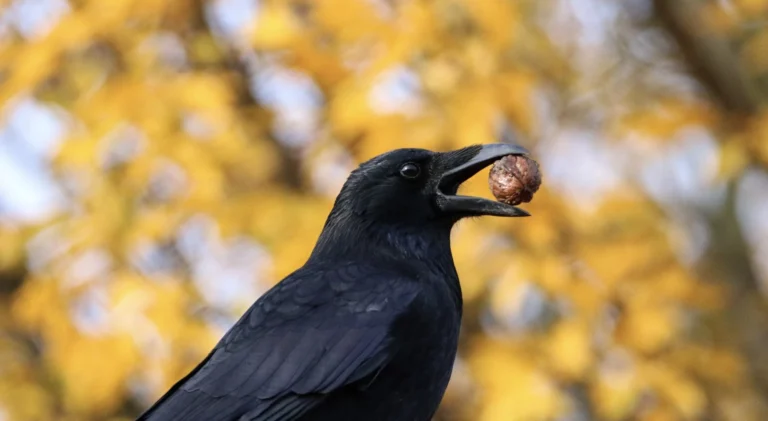
While crows eat commercial seeds, they also distribute wild ones, planting berries, fruits and nuts far and wide with their droppings. And by caching seeds and nuts, they maintain forests.
Fictional justifications for shooting crows haven’t changed in more than a century, but neither have fictional justifications for their existence. The same defense of persecuted wildlife offered by the Biological Survey in 1918 is today a mantra from the environmental community. Defending species because they’re deemed beneficial to human interests implies that elimination of species deemed detrimental to human interests is acceptable.
While crows eat commercial seeds, they also distribute wild ones, planting berries, fruits and nuts far and wide with their droppings. And by caching seeds and nuts, they maintain forests.
No wildlife species should be conserved simply because it is beneficial or because it is intelligent or because it is beautiful or because it is anything, only because it is.
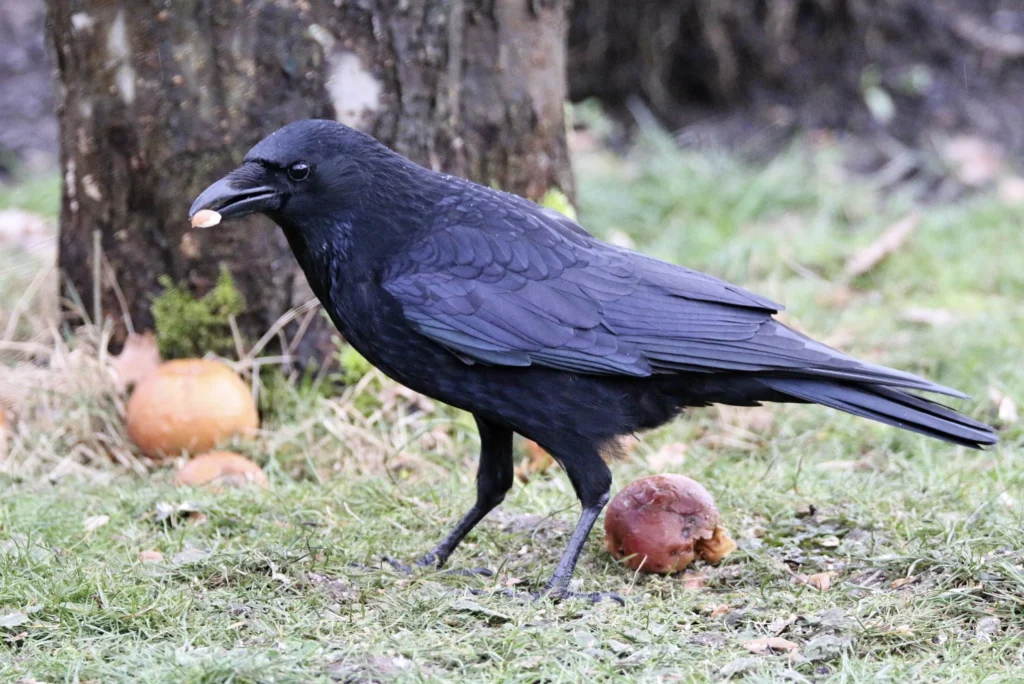
Crows belong on and to our land. They are loud, resourceful, durable, and adaptable. They live in wilderness and megalopolis, prospering with or without us. They are part of smoke-scented twilights and crisp, otherwise silent mornings, part of what we were, are, and hope to be. And whatever we leave our future with or without, they are part of it.
Ted Williams, a lifelong hunter, writes exclusively about wildlife and serves on the Circle of Chiefs of the Outdoor Writers Association of America. He owns 12 firearms and is licensed to carry high-capacity concealed weapons.