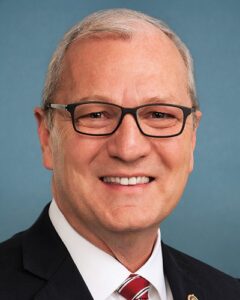
Tenure: 116th–119th Congresses (House service: 113th–115th Congresses)
Years of Service: 2019–Present
Notable Actions
119th Congress
✅ Voted “Aye” on the motion to proceed to S.J. Res. 69 (Senate Roll Call Vote 597), a joint resolution under the Congressional Review Act to bring the measure before the Senate for consideration to overturn the U.S. Fish and Wildlife Service’s Barred Owl Management Strategy, which authorized the large-scale killing of barred owls in Washington, Oregon, and California. An “Aye” vote is the pro-animal position because it supported moving forward with a vote to repeal the barred owl kill plan.
118th Congress
❌ Voted “Yea” on S.J. Res. 23 (Senate Roll Call Vote 122), a Congressional Review Act resolution to overturn federal regulations governing the listing of endangered and threatened species and designation of critical habitat under the Endangered Species Act. A “Yea” vote is the anti-animal position because it supported weakening federal protections for imperiled wildlife and their habitats.
117th Congress
✅ Approved by unanimous consent, the Big Cat Public Safety Act, H.R. 263, to prohibit most private ownership and breeding of lions, tigers, and other big cats while restricting public contact with these dangerous wild animals. The law was designed to curb the exploitation of big cats in roadside zoos and cub-petting operations, improve animal welfare, and enhance public safety by limiting private possession of these species.
❌ Voted “Yea” on Sen. Ron Johnson’s Motion to Instruct conferees on H.R. 4521 (Senate Roll Call Vote 152), which sought to reject a House-passed provision prohibiting commercial mink farming in the United States. A “Yea” vote is the anti-animal position because it supported removing the House provision to end commercial mink farming.
116th Congress
✅ Approved by unanimous consent the Preventing Animal Cruelty and Torture (PACT) Act, landmark legislation making the most egregious acts of intentional animal cruelty—including crushing, burning, drowning, suffocating, impaling, and other forms of torture—a federal felony when committed in interstate commerce, on federal property, or within federal jurisdiction. The measure strengthened the nation’s legal framework against animal cruelty and closed a longstanding gap in federal law by ensuring that the worst acts of animal abuse could be prosecuted even when state or local authorities could not act. The Senate passed the bill by unanimous consent.