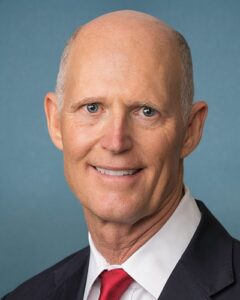
Tenure: 116th–119th Congresses
Years of Service: 2019–Present
Notable Actions
119th Congress
✅ Cosponsor of S.J. Res. 69, to nullify the FWS Plan to Kill 450,000 Barred Owls across 24 million acres, including 14 national parks and 17 national forests, and is now going to be used as a “mitigation measure” to allow incidental take of spotted owls – turning this plan into an effort to shoot barred owls and to kill spotted owls by cutting down the trees they require to survive.
✅ Cosponsor of the Save America’s Forgotten Equines (SAFE) Act, S. 775, to ban U.S.-based horse slaughter and the export of horses for slaughter for human consumption.
✅ Lead sponsor of the Cease Animal Research Grants Overseas (CARGO) Act, S. 1802, bipartisan legislation to prohibit the National Institutes of Health from funding research involving live animals outside the United States, where NIH lacks direct inspection and oversight of animal-welfare practices.
✅ Cosponsor of the Fighting Inhumane Gambling and High-risk Trafficking (FIGHT) Act, S. 1454, to strengthen federal enforcement against animal fighting and related criminal activity.
✅ Lead cosponsor of the Worldwide Animal Testing Compliance and Harmonization (WATCH) Act, S. 1104, bipartisan legislation to require quarterly inspections of foreign laboratories receiving NIH funding for animal research to ensure compliance with animal welfare standards and suspend or revoke federal funding for facilities that fail to correct violations.
✅ Voted “Aye” on the motion to proceed to S.J. Res. 69 (Senate Roll Call Vote 597), a joint resolution under the Congressional Review Act to bring the measure before the Senate for consideration to overturn the U.S. Fish and Wildlife Service’s Barred Owl Management Strategy, which authorized the large-scale killing of barred owls in Washington, Oregon, and California. An “Aye” vote is the pro-animal position because it supported moving forward with a vote to repeal the barred owl kill plan.
118th Congress
✅ Lead cosponsor of Goldie’s Act, S. 4033, bipartisan legislation to strengthen enforcement of the Animal Welfare Act by requiring more frequent inspections, faster reporting of violations, and improved protections for animals suffering abuse or neglect.
❌ Voted “Yea” on S.J. Res. 23 (Senate Roll Call Vote 122), a Congressional Review Act resolution to overturn federal regulations governing the listing of endangered and threatened species and designation of critical habitat under the Endangered Species Act. A “Yea” vote is the anti-animal position because it supported weakening federal protections for imperiled wildlife and their habitats.
117th Congress
✅ Approved by unanimous consent, the Big Cat Public Safety Act, H.R. 263, to prohibit most private ownership and breeding of lions, tigers, and other big cats while restricting public contact with these dangerous wild animals. The law was designed to curb the exploitation of big cats in roadside zoos and cub-petting operations, improve animal welfare, and enhance public safety by limiting private possession of these species.
❌ Voted “Yea” on Sen. Ron Johnson’s Motion to Instruct conferees on H.R. 4521 (Senate Roll Call Vote 152), which sought to reject a House-passed provision prohibiting commercial mink farming in the United States. A “Yea” vote is the anti-animal position because it supported removing the House provision to end commercial mink farming.
116th Congress
✅ Cosponsor of the Rescuing Animals With Rewards (RAWR) Act, S. 1590, to combat international wildlife trafficking by authorizing rewards for information leading to the disruption and prosecution of transnational wildlife trafficking networks.
✅ Approved by unanimous consent the Preventing Animal Cruelty and Torture (PACT) Act, landmark legislation making the most egregious acts of intentional animal cruelty—including crushing, burning, drowning, suffocating, impaling, and other forms of torture—a federal felony when committed in interstate commerce, on federal property, or within federal jurisdiction. The measure strengthened the nation’s legal framework against animal cruelty and closed a longstanding gap in federal law by ensuring that the worst acts of animal abuse could be prosecuted even when state or local authorities could not act. The Senate passed the bill by unanimous consent.