
Even as deadly and dangerous bird flu outbreak occurs at mink farm, federal lawmakers persist with effort to restore massive subsidy to U.S. mink industry to try to keep the industry alive
WASHINGTON. D.C. — Animal Wellness Action and the Center for a Humane Economy today called on federal and Utah animal- and public-health authorities to disclose critical information about the first recognized outbreak of highly pathogenic avian influenza H5N1 in farmed mink in the United States, confirmed in Utah in August. Reports indicate 80 percent of mink perished at the mink farm.
The organizations, including their lead veterinarians and experts on zoonotic disease, called on USDA to endorse efforts in Congress to shut down mink farms as “inhumane factory farms that are well-known to incubate a variety of viruses that threaten human health.”
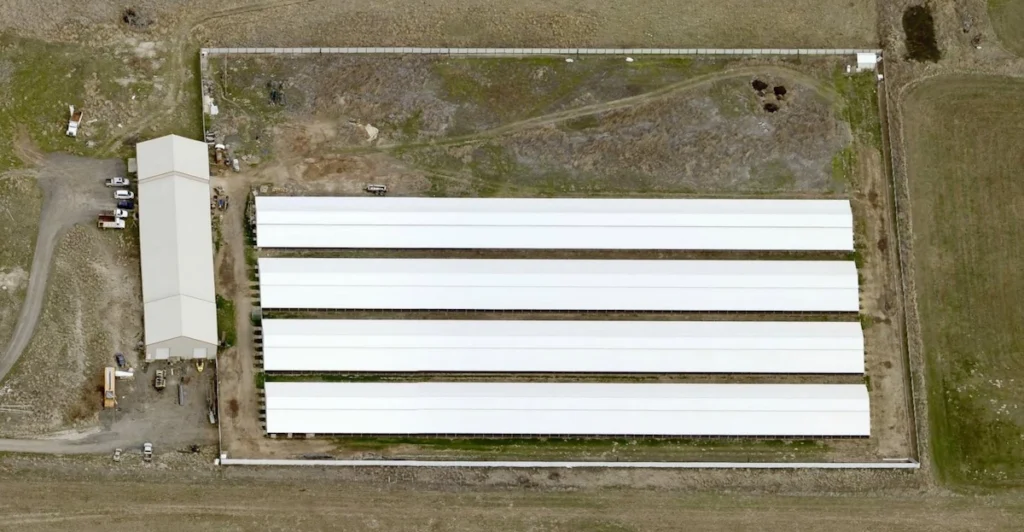
USDA records show mink sampled August 7 were confirmed H5N1-positive August 17. More than a month later, agencies have not disclosed even the county of the affected farm, its mink population, illness or deaths, whether mink-to-mink transmission occurred, the fate of the herd, suspected source, worker-exposure findings, or detailed viral sequence results.
The silence comes at an incongruous moment in federal mink policy. USDA terminated its annual Mink Survey in August 2025 as the industry declined from 5.46 million pelts in 1969 to 771,200 in 2024. Yet on September 16, the Senate Agriculture Committee advanced a Farm Bill provision that would repeal the longstanding prohibition on federal Market Access Program assistance to mink-industry trade associations.
“This is a potentially consequential outbreak in one of the mammalian species influenza scientists worry about most, yet almost everything about it remains hidden from public view,” said Jim Keen, D.V.M., Ph.D., director of veterinary Science for the Center for a Humane Economy and a former USDA research scientist.
Outbreak discovered in a database not announced by government
The outbreak came to public attention not through USDA, Utah agriculture or health officials, or CDC, but after independent disease watchers found the seven farmed mink detections in USDA’s mammalian H5N1 database. Hogvet51 and FluTrackers reported them August 21; Avian Flu Diary noted August 22 that it could find no mainstream-media report, Utah agriculture announcement or corresponding World Organization for Animal Health report.
“This isn’t an obscure infection in an isolated wild animal,” said Wayne Pacelle, president of Animal Wellness Action and the Center for a Humane Economy. “It occurred among intensively confined mink, animals with a documented history of amplifying respiratory viruses and providing opportunities for viral evolution. Americans deserve to know what happened and what government found.”
In Galicia, Spain, in 2022, H5N1 infected a farm of about 52,000 American mink. The disease pattern suggested mink-to-mink transmission; all mink were culled; and sequencing identified PB2-T271A, a mutation associated with mammalian adaptation. Finland’s 2023 fur-farm outbreaks prompted movement controls, culling, extensive epidemiologic and genomic investigation, coordinated animal- and human-health surveillance, and nationwide mink-farm surveillance.
Yet in Utah, the public still does not know whether the infected mink represented independent spillovers or whether H5N1 spread from mink to mink.
Mink are not just another mammalian host
A 2024 Nature Communications study of the Spanish mink virus found direct-contact and, experimentally, airborne transmission among ferrets; reversing PB2-T271A reduced polymerase activity, virulence and airborne transmission. Other work in Nature and PNAS has highlighted farmed mink and other fur animals as important hosts in zoonotic-virus emergence and pandemic preparedness.
“Finding H5N1 in mink is precisely when sequencing matters,” Keen said. “We need to know whether these viruses carry PB2-T271A, E627K, D701N or other mammalian-adaptive substitutions and whether their genetic relationships show transmission among mink. That could distinguish simple spillover from something epidemiologically more important.”
The mink infections did not occur in isolation. Northern Utah experienced abnormal substantial summer 2026 H5N1 activity in 25 dairy herds, large commercial-poultry outbreaks, wild birds, domestic cats and skunks. Comparing the mink virus with viruses circulating in Utah cattle, poultry and wildlife could help identify its source and route of introduction.
USDA’s National Agricultural Statistics Service ended its annual Mink Survey in August 2025 after more than five decades, citing among its reasons the industry’s dramatic contraction. Congress is now considering reopening federal export-promotion assistance to the same industry by repealing the roughly three-decade exclusion of mink-industry trade associations from the Market Access Program.
“Why are we talking about using federal resources to promote American mink products overseas while we have stopped annually surveying the industry and cannot get basic epidemiologic information about the first recognized H5N1 outbreak on a U.S. mink farm?” said Colonel Tom Pool, D.V.M., M.P.H., U.S. Army (Ret.) and senior veterinarian with Animal Wellness Action.“Disease surveillance and public-health transparency should come before market promotion.”
Animal Wellness Action and the Center for a Humane Economy are asking USDA APHIS, CDC, the Utah Department of Agriculture and Food, and the Utah Department of Health and Human Services to disclose: farm size; numbers of mink sick, dead and tested; and the disposition of the herd; the suspected source and whether epidemiologic or genomic evidence indicates mink-to-mink transmission; the complete viral genotype and presence or absence of mammalian-adaptive mutations; comparisons with H5N1 viruses circulating in Utah cattle, poultry and wild birds; and the number of exposed workers, monitoring or testing results, and biosecurity and quarantine measures.
“The epidemiology and genomic findings have not been adequately communicated,” said Keen. Spain investigated. Finland investigated, sequenced, reported and acted. Why should the first recognized H5N1 outbreak on an American mink farm receive less scrutiny?”