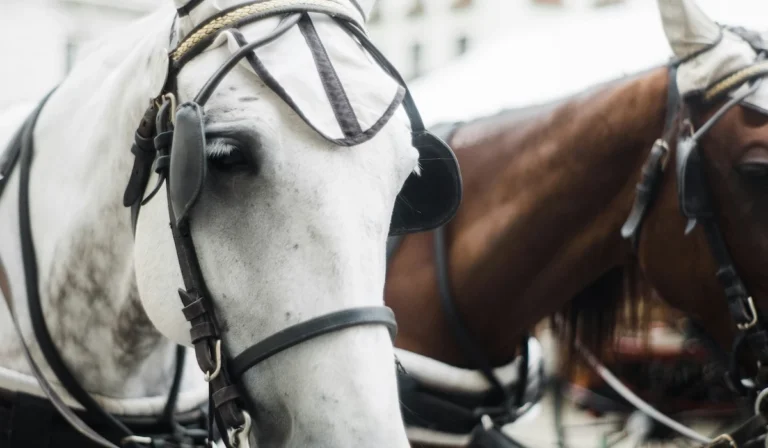
Horse Exploitation in Three Acts
We can turn around these hazards for horses with determined, strategic action
- Wayne Pacelle
Reckless, neglectful, or intentionally harmful treatment of horses is an understated problem in America. We’re putting horses at risk even though we, as a nation, owe so much to them for their prior service in battle, sport, show, transport, law enforcement, and companionship.
Whether horses are being trafficked by kill buyers for slaughter, forced to cart tourists through the streets and pathway in and around Central Park in New York City, or housed in racing stables lacking basic safety precautions, the common thread is the same: more than a few people involved with horse use continue to treat the animals as commodities rather than as living, feeling beings deserving of care and respect.
A Young Man’s Death and the End of the Carriage Horse Trade
In New York City this week, an 18-year-old young man lost his life yesterday after a horse pulling a carriage reportedly became frightened and bolted, throwing passengers from the carriage. His tragic death reminds us all that it’s past due to bring an end to the horse carriage industry in our nation’s biggest metropolis.
For years, advocates have documented the dangers of forcing horses to endure the stresses of crowded streets, urban noise and traffic, extremes of weather, asphalt surfaces that hooves were never meant to traverse day after day, and other unpredictable conditions of New York from summer to winter. Policymakers should not hesitate to act. Government works best when it does not merely react to crises, but forecasts problems and finds solutions before tragedies strike.
The fatal incident came just days after the death of Deniz, a carriage horse who collapsed while pulling tourists through Central Park. It follows a long history of horse breakdowns, injuries, and deaths connected to this heirloom industry.
Animal Wellness Action and the Center for a Humane Economy stand with the New York-based equine advocacy group NYCLASS, calling for decisive policy reform. New York City should immediately enact Ryder’s Law, named after a beleaguered workhorse who collapsed on a NYC street and lay there medically unattended for hours, dying just two months later.
The New York City Council must ban the use of horse-drawn carriages and make it effective immediately. Until it does so, Mayor Zohran Mamdani should suspend carriage horse operations through executive action.
No more delays. No more excuses. The pattern is clear: horses break down on the streets and suffer and die; they are spooked, and race down streets choked with people, cars, and trucks; and, as we saw yesterday, they even produce human casualties.
There must not be one more turn of a wheel from a horse-drawn carriage in New York City.
Seventeen Horses Lost in a Preventable Barn Fire
At nearly the same time, another horse-related catastrophe unfolded in upstate New York, in Saratoga Springs.
A fire at a stable associated with the Saratoga Casino Hotel harness racing facility killed 17 horses: Arlanda, Conquest As, Crazy Jet, Five Star Lou, Free Willy Hanover, Gimlet Hanover, Influencer, Lyons Dukey, Muscle Dynasty, Our Father Lindy, Perfect Bang, Quite Like Me, Race Me Bombshell, Red, Shalamar Hanover, Trackstar, and Tropical Cyclone.
These horses were not racing inventory. They were sentient individuals whose lives ended in terror and suffering.
While it is fortunate that no people were injured and we commend the first responders and others who prevented further loss, the tragedy raises a fundamental question: how could a facility housing hundreds of horses lack a fire-suppression system?
Barn fires are among the most predictable and preventable disasters involving animals. Experts have warned for decades about the dangers posed by combustible materials, electrical failures, aging infrastructure, and inadequate emergency protections. Yet meaningful reforms have lagged.
Fire-safe barns should be the industry standard. Sprinkler systems, modern fire detection equipment, fire-resistant construction materials, compartmentalized designs, emergency evacuation planning, and rigorous safety protocols are not luxury items. They are basic safeguards.
The deaths of these 17 horses must become a catalyst for reform throughout the racing industry. No horse should perish because it was trapped in an antiquated barn lacking protections that experts have long recommended.
President Trump Should Permanently End Horse Exports for Slaughter
The third major horse issue fresh in my mind involves a development with national implications.
Recognizing the risks of the spread of New World Screwworm, the U.S. Department of Agriculture has suspended the export of live horses to Mexico. The agency’s action demonstrates that when the federal government recognizes a serious threat, it can move decisively to stop the cross-border movement of animals.
That temporary suspension should become an enduring policy.
For years, Animal Wellness Action and the Center for a Humane Economy have fought the cruel pipeline that funnels American horses to slaughter plants in Mexico. Kill buyers acquire horses throughout the United States and transport them hundreds or thousands of miles across the border to be butchered, for re-export to distant and shrinking foreign markets, mainly Japan.
The USDA has halted that flow—for now.
We are calling on President Trump to issue an Executive Order to indefinitely prohibit the export of American horses to Mexico for slaughter and to dismantle the cross-border trafficking pipeline that has endangered horses for decades. The temporary suspension has shown that the federal government possesses the authority to stop this trade. The administration should now use that authority to achieve a lasting solution. We are asking federal lawmakers to reach out to the president and encourage him to act.
This is not a partisan issue. It is a matter of basic decency.
President Trump has an opportunity to secure one of the most important horse-protection reforms in modern American history. We urge him to seize it.
Three Events, One Lesson
The common denominator in all three cases is not simply suffering. It is the failure of policymakers to act on known risks and perils for horses.
We knew the hazards associated with horse-drawn carriages in New York City.
We knew the dangers of housing hundreds of horses in barns without modern fire-suppression systems.
We have long known the cruelty and crass opportunism inherent in the horse-slaughter pipeline that ships American horses to Mexico for slaughter.
The case for action is overwhelming.
We cannot continue to govern by tragedy, or to subordinate suffering and exploitation to minor commercial gain.
We have an opportunity now to finish off the carriage-horse trade in New York City once and for all. And we have an incredible opportunity to stop the slaughter pipeline of American horses being butchered in Mexico.
We can achieve these goals. Just like we are shutting down Ridglan Farms and its beagle killing. Just like we ran the table with the biggest athletic shoe companies and stopped their sourcing of kangaroo skins. Just like we eliminated the long-standing mandates for animal testing in drug development with the FDA Modernization Act 2.0.
Change requires persistence. It also requires your help and your advocacy.
Don’t sit on the sidelines. Rush to the front line and fight.
Help us pass Introduction 943 to end the horse-carriage industry in New York!
Wayne Pacelle, president of Animal Wellness Action and the Center for a Humane Economy, is the author of two New York Times bestselling books, “The Bond” and “The Humane Economy.”
Dear reader: If you support substantive policy work to protect animals, please consider donating to Animal Wellness Action here. You can give any amount one time, or make it a monthly gift, as many of our supporters do. Thank you for helping us fight for all animals.