Bipartisan legislation will expedite transition toward human-relevant testing methods and away from use of dogs, primates, and other animals in drug screening protocols
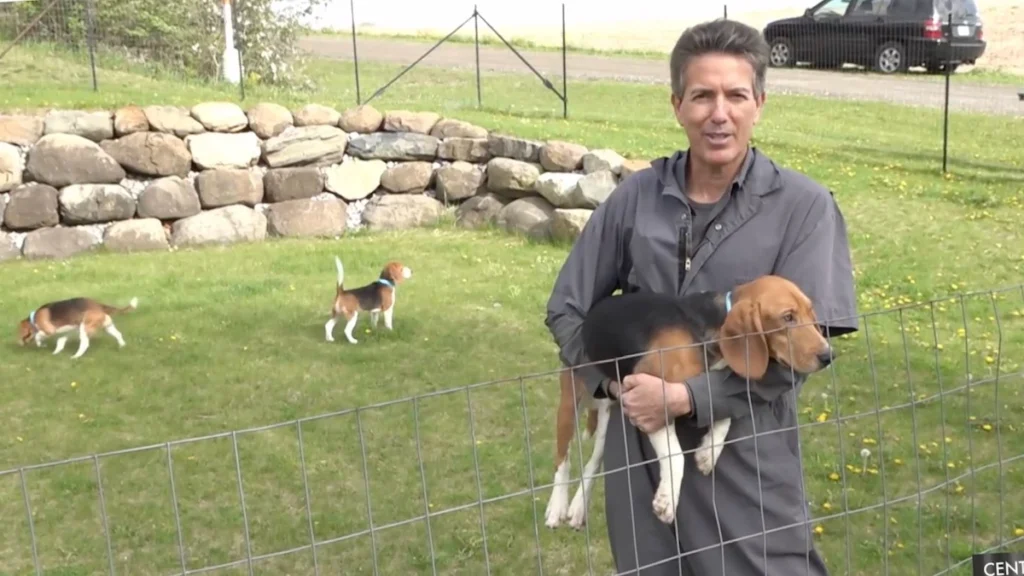
WASHINGTON, D.C. — Animal Wellness Action and the Center for a Humane Economy applauded the U.S. House Energy and Commerce Committee’s passage of H.R. 2821, the FDA Modernization Act 3.0, to ensure that FDA regulations will no longer mandate animal testing of new drugs where federal law does not require it. The committee action comes in the wake of the historic movement of 1,500 beagles from Ridglan Farms, in an agreement struck between the Center for a Humane Economy, Big Dog Ranch Rescue, and Ridglan Farms. The beagle rescue has accelerated public outcry for the research-industrial complex to adopt humane alternatives to animal testing.
The bipartisan legislation led by Reps. Buddy Carter, R-Ga., Nanette Barragán, D-Calif., Diana Harshbarger, R-Tenn., Rosa DeLauro, D-Conn., Vern Buchanan, R-Fla, and Troy Carter, D-La., passed without dissent. And it brings the legislation one major step closer to enactment, given that the U.S. Senate unanimously passed a companion bill, S. 355, on December 16. That bill was led by Senators Cory Booker, D-N.J., and Eric Schmitt, R-Mo., and the two lawmakers had also shepherded it to passage in December 2024, with the support of Senators Bill Cassidy, R-La., and Bernie Sanders, I-Vermont, who have led the Senate HELP Committee.
The movement of the legislation also comes just over one year after the FDA released a “Roadmap to Reduce Animal Testing in Preclinical Safety Studies,” which favorably referenced the FDA Modernization Act 3.0 and called for making animal-free testing the norm in drug development within five years.
“The Ridglan Farms rescue puts a face on the often-cloaked practice of laboratory breeding companies supplies beagles and other animals to laboratories for painful, invasive, and ineffective tests,” said Wayne Pacelle, president of Animal Wellness Action and the Center for a Humane Economy. “Congress and the FDA are signaling to all drug developers that they should move with intentionality to employ human-biology-based drug screening methods and to leave the dogs, primates, and other animals out of the R&D programs.”
Largely because animal tests cannot reliably predict human responses to drugs, over 90 percent of drugs and vaccines discovered in the lab never make it to market. Such inefficiencies in the regulatory system mean that developing a single new drug can take decades and cost billions of dollars.
“The advancement of FDA Modernization Act 3.0 marks another major step toward a more modern, effective, and humane system for evaluating medicines,” said Rep. Buddy Carter, R-Ga., the sponsor of the legislation. “Congress already acted in 2022 to remove unnecessary barriers to innovative non-animal testing methods, and this bill helps ensure FDA implementation fully reflects both the law and today’s scientific capabilities.”
“Removing outdated animal testing mandates from federal law can help get drug treatments to patients faster,” said Rep. Nanette Barragán, D-Calif., the lead Democratic co-sponsor of the legislation. “The FDA Modernization Act 3.0 helps ensure federal implementation keeps up with modern scientific innovation and the growing availability of human-relevant research methods.”
“Today’s full committee passage is another important step toward modernizing how we bring safe and effective drugs to market,” said Congresswoman Diana Harshbarger, R-Tenn., lead Republican co-sponsor.“The FDA has the authority to move beyond outdated, cruel testing methods, and our bill simply directs the FDA to follow through and update its regulations accordingly. I’m proud to work alongside Congressman Buddy Carter and my colleagues to keep this bipartisan effort moving forward.”
“Three years ago, Congress eliminated an 84-year-old requirement for extensive, multi-species animal testing for all new drug development programs, but the agency still hasn’t drafted regulations to apply that standard. Our bill requires the FDA to work aggressively to shift away from animal tests and to more reliable, human-cell-based drug screening methods. It’s a win for patients, a win for innovation, and a win for animal welfare. I’m proud to join this bipartisan measure to accelerate safer, more humane, and more effective medical breakthroughs,” said Rep. Troy A. Carter Sr., D-La., an original co-sponsor of H.R. 2821.
Most diseases have no treatment available, and adverse reactions to properly prescribed medications remain a major cause of injury and death in the United States, leading to tens of thousands of deaths and hundreds of thousands of hospitalizations annually. Use of human biology-based test methods would better predict how humans will respond to drugs in clinical trials.
“The FDA Modernization Act 3.0 is not a new policy initiative so much as the next phase of implementation,” said Tamara Drake, director of research and regulatory policy for the Center for a Humane Economy. Supporters point to recent FDA and NIH initiatives promoting organoids, organ-on-chip systems, computational toxicology, and other advanced approaches as evidence that the transition toward more predictive, animal-free science is already underway.
“The plight of the beagles reminds us of the stakes of the animal-testing question,” added Pacelle. “We must move with all deliberate speed to make the transition to modern, human-relevant science and halt the outdated inhumane use of animals in drug screening throughout the world.”
Animal Wellness Action and the Center for a Humane Economy are calling upon U.S. House leadership to bring the Senate-passed measure to the House floor promptly for final passage. And the organizations are working with Reps. Nick Langworthy, R-N.Y., Mark Pocan, D-Wisc., and other lawmakers on legislative efforts to wind down the use of animals in painful and invasive tests and experiments.