Headed to House Floor Next Week, the Factory Farm Bill Is Noxious
House Agriculture Committee Chairman Glenn Thompson has put an ugly thumbprint on an inhumane farm bill
- Wayne Pacelle
There have always been hardened opponents of the most important social causes in American history – whether the “fire-eaters” who defended slavery in the antebellum South, the men who mocked women’s suffrage just more than a century ago, or the racists who stood in the way of civil rights in the midsection of the 20th century.
There are lawmakers and animal-use industries who show little concern for the suffering of animals. It’s not been an uncommon experience of mine to deal with lawmakers and the animal-use trade associations (e.g. the Safari Club International or the National Pork Producers Council) exhibiting either an indifference to animal cruelty or, in some cases, even quietly relishing it. No matter which bucket they fall into – the indifferent or the ruthless –- they are unable to tap any latent reservoir of compassion to support animal welfare policies, no matter how modest or mainstream.
Congressman Glenn Thompson, before he became chairman of the House Agriculture Committee, never struck me as either kind of man. To be sure, he was upfront with me that he supported intensive confinement of farm animals. But he found ways to show support for some other animal welfare policies, supporting the Bear Protection Act to stop the trade in bear gallbladders and backing animal-fighting amendments to the 2014 and 2018 Farm bills to make it a federal crime to be a spectator at an animal fighting venture and to apply all federal prohibitions against animal fighting to the U.S. territories. I commend him for supporting those humane measures.
So, when I learned a few years ago that he was in line to ascend to the chairman’s seat on the House Agriculture Committee, I was hopeful he’d bring some measure of balance on animal welfare policy. Several of his predecessors showed a knee-jerk opposition to any bill with an animal welfare brand on it.
To say the least, it’s been jarring to see his transformation into a hardened opponent of animal welfare. You don’t have to agree with cage-free production to accept that the states have the right to adopt constitutionally sound animal welfare policies. To work to undermine the states’ few animal protection laws, and to choose not to build a federal framework to pick up the slack, shows a sort of contempt for the norms of governing.
That error is compounded in showing a lazy approach to the policy details and the facts. After the conservative Supreme Court upheld California’s Prop 12 as a proper and constitutional exercise of state authority, Chairman Thompson told his colleagues that the high court directed congress to overturn the law. You can read Justice Gorsuch’s opinion a thousand times and you’ll not find any such directive. The court doesn’t work that way.
He’s also said California’s Prop 12 results in the “crushing of baby pigs.” Here, he demonstrates a lack of familiarity with the law and with common farming practices. Prop 12, and the 10 other states restricting extreme confinement of pigs, limit use of gestation crates (pre-birthing crates, with the piglets still in the womb). Farrowing crates, which restrict mobility after birth and confine mothers and their piglets, are not prohibited by even one of the 11 state laws.
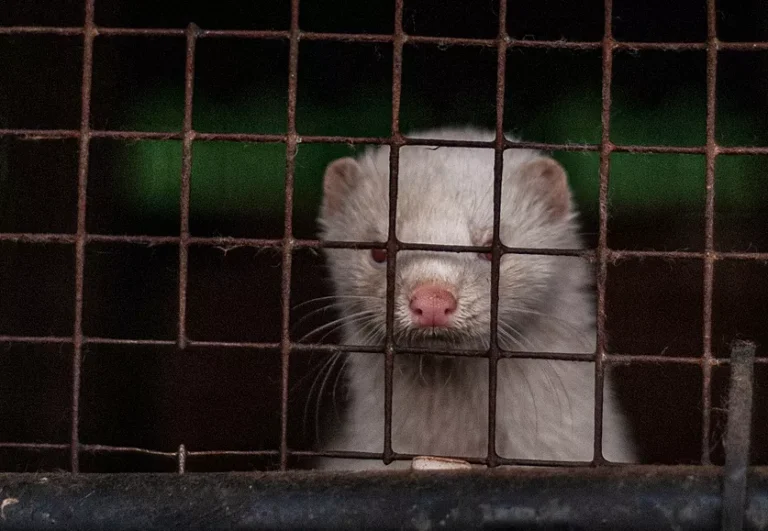
Mink Farming Subsidy a Gratuitous Attack on Animal Welfare
I was even more surprised to discover Thompson inserted a provision in the Farm Bill to repeal a 30-year-old federal law that prevents your federal tax dollars from funding the marketing and promotion of the mink fur industry.
The 1996 Agriculture spending bill that President Bill Clinton signed in the fall of 1995 contained a restriction on federal tax dollars being used for “a market promotion program … that provides assistance to … the U.S. Mink Export Development Council or any mink industry trade association.” This measure passed the House in a lopsided vote. And ultimately, it passed without any opposition in the Senate after 78 of 100 senators voted against a preliminary motion to set it aside.
If the current House Farm Bill becomes law, it will repeal this funding proscription and subsidze the luxury mink coat industry. And only four years ago, the full House of Representatives voted to phase out domestic mink farming altogether because the mistreatment of the animals and the viral threats spawned at these factory farms are so acute.
The Thompson provision on mink farming is a provocation, and nothing less. It shows contempt not only for animals, but for taxpayers – treating their hard-earned money as a political device to display the policy issues that the animal welfare community values.
His attack on the FIGHT Act – a measure to strengthen federal enforcement of the existing laws against dogfighting and cockfighting – was also ill-tempered in the extreme. That bill has 82 Democrats and 63 Republicans as cosponsors in the House – the strongest bipartisan bill on animal welfare in the Congress by a long shot. In opposing the bill and bullying other lawmakers to pull back from supporting the legislation, Thompson explained it was a sort of Trojan horse, hiding a provision to “include farm animals in the Animal Welfare Act.”
The federal law against animal fighting has, since inception, applied to “any live bird, or any live mammal, except man.” Roosters are named in the FIGHT Act, but even the man on the moon knows that roosters are male chickens, who have had a perch in the Animal Welfare Act since its original formulation 50 years ago in 1976.
No Respect for the Majority Opinion of the House
Congressman Vern Buchanan, R-Fla, has been leading the SAFE Act for 15 years – a bill to halt the live exports of horses and other equines for slaughter for human consumption. Thompson has signaled he’s strongly opposing that bill, too, even though Buchanan has 228 House bipartisan cosponsors of his bill.
So, Thompson has chosen to battle two bills (FIGHT and SAFE), with 373 cosponsors from both parties. But he inserted two provisions – the Save Our Bacon Act and the mink subsidy measure – that have a total of 26 cosponsors. Rep. Ashley Hinson’s bill has 26 Republican cosponsors and zero Democrat cosponsors. And there is no mink subsidy bill, so that amounts to zero cosponsors.
Beyond the paltry support for the SOB Act – the most consequential of the animal-related measures – Chairman Thompson deserves some tough questions.
- Why is he heeding the demands of a trade association dominated by two foreign-owned companies that together control 40% of domestic production of pork in America? No sector of American agriculture has anything close to this level of foreign control, and the level of control exhibited by the Chinese Communist Party should be setting off alarm bells within the 119th Congress.
- What happens to the thousands of American farmers who collectively invested billions in more extensive, more humane housing for breeding sows if the SOB Act passes and Smithfield and JBS flood the market with their cheap, factory-farmed pork?
- Why are they not taking into account the ballot measures and legislative activity that have produced bans on gestation crates in 11 states? And why are they ignoring the public pronouncements from McDonald’s, Costco, Walmart, Cracker Barrel, and 50 other major food retailers in opposition to gestation crates?
If past is prologue, I’m afraid as the Farm Bill is readied for consideration on the House floor, Chairman Thompson will offer more misdirection on animal welfare issues. He literally cannot find an animal welfare provision he can support in this Congress, even opposing the mainstream Greyhound Protection Act when it came up in committee. He treats his potent chairmanship as some sort of license to thwart the values of many millions of Americans who are serious-minded about treating animals with dignity and respect. It’s no game to all Americans who are morally alert to the suffering of animals.
Dear reader: If you support substantive policy work to protect animals, please consider donating to Animal Wellness Action here. You can give any amount one time, or make it a monthly gift, as many of our supporters do. Thank you for helping us fight for all animals.