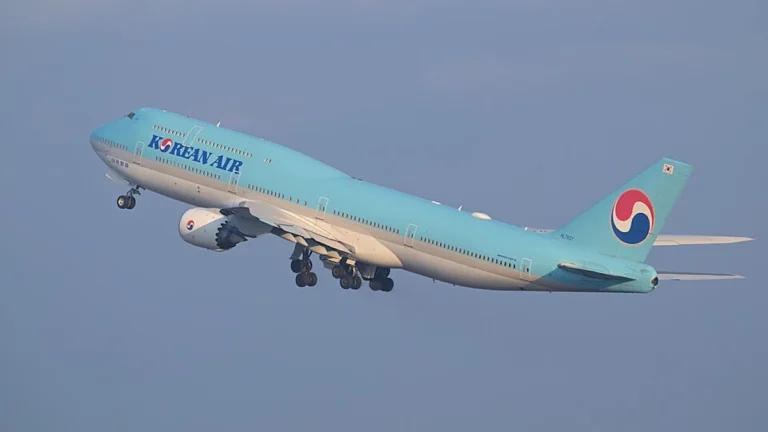
Korean Air to End Shipping Roosters to the Philippines
We just shut down the world’s biggest cockfighting pipeline: Fighting Birds Shipped from the U.S. to the Philippines via this major air carrier
- Wayne Pacelle
Today marks one of the most significant non-legislative breakthroughs we’ve ever secured in our quest to eradicate animal fighting in the United States and across the globe.
After months of investigations, and more recent inter-corporate engagement about our findings, Korean Air — in our estimation, a major means by which illegally trafficked birds have been transported — has cooperated with us to halt all shipments of roosters to the Philippines. The company’s U.S. lawyer has confirmed the change in policy to us.
We are grateful to Korean Air for giving us an audience and allowing us to present the mass of information revealing that the company was being taken advantage of by U.S. cockfighters, pretending to be “farmers” and benign “breeders,” but who have been supplying roosters to the Philippines every year by the tens of thousands and directly participating in the fights themselves.
While cockfighters in the United States are the biggest global players in trafficking fighting birds, the biggest consumers of U.S. fighting birds are Mexico and the Philippines. Transports of the U.S.-reared birds to Mexico go by ground and air, but all the birds fly across the Pacific and to the Philippines at 35,000 feet.
In 2025, it’s been reported that perhaps 100 people have been murdered in disputes over cockfighting in the Philippines, including over debts from rampant online gambling (known as “e-sabong”). In the Philippines in 2022, there was an estimated $13 billion wagered on e-sabong. And according to the Cybercrime Investigation and Coordinating Center, “a total of 52,847 domains and sub-domains linked to e-sabong or online cockfighting have been taken down since 2023.” But they pop up as quickly as they are taken down in this form of organized crime.
Select birds, who come from U.S. breeding lines that win derbies, easily go for $2,000 each. With perhaps 50,000 U.S.-reared cockfighting birds shipped to the Philippines, the illicit haul is $100 million for the sellers in the New World.
By cooperatively working with Korean Air and cutting off a route that cockfighters had been quietly taking advantage of — in one of the two major global hubs of fighting derbies — we are starving them of the commerce that fuels their organized crime network. We know our work is not done, and that’s why we are working to restrict international shipments of roosters by all airlines with flights originating in the United States.
Following the Birds from Texas to Manila
This victory is rooted in painstaking investigative work by Animal Wellness Action and the Center for a Humane Economy and our undercover investigator, who is perhaps the world’s top animal-fighting sleuth.
That anonymous investigator unpacked a cockfighting trafficking pipeline from Dallas to Manila.
On the front end of this process, our investigator identified a “broker” and “bundler” aggregating fighting birds from across the Southeast and Southwest calling itself the North Texas Livestock Service. The Filipino men running this illegal brokerage operation worked with cockfighters in that region, took their birds for a transport fee, and then packed them up and shipped them through available commercial routes, including Korean Air flights to Manila.
But we didn’t stop, once we sniffed out that scheme.
To expose the complete transit route, our investigator traveled to Manila and went to the main event of the global cockfighting community: the World Slasher Cup, an orgy of rooster mutilation that occurs annually during the last week of January at the Araneta Coliseum.
In packed arenas filled with thousands of spectators, he documented American birds conscripted into fights. He counted up 800 staged animal battles at this year’s spectacle, attesting that both birds in a fight often succumbed in the pit to their injuries inflicted by the slashes and stabbing from the knives affixed to the birds’ legs.
He captured video footage of 15 major American cockfighters in the pits, handling their birds and goading them to fight. These are the same men who claimed, in various settings and online postings, that they ship birds only as “breeders” and cannot foresee what the buyers do with them.
But we’ve pulled back the curtain and shone a light on this fact pattern: these people raise birds for fights, and for no other purpose. Their business is illicit at its core.
Key Lawmakers Call Out the Animal Trafficking Scam
We brought our investigative findings to the chairman of the Aviation Subcommittee in the U.S. House of Representatives. The former Bend County sheriff outside of Houston, Chairman Troy Nehls, R-Texas, was disgusted by the details. He’d busted dogfights and cockfights when he served as sheriff.
In February, Nehls introduced the No Flight, No Fight Act, H.R. 7371, to restrict any shipment of roosters on commercial airlines and other air carriers. Given his role in leading a key U.S. committee, his legislative work got the attention of the airlines. Nehls has vowed to move this legislation this year through the Transportation and Infrastructure Committee, and we are working on the Senate side to introduce companion legislation.
And this week, Nehls modified his bill to conform it to the animal fighting section of the Animal Welfare Act, and bundled it with some closely related provisions of the FIGHT Act. He introduced Amendment No. 22 to H.R. 7567, the Farm, Food, and National Security Act. He’s hoping to get the chance to offer his bill to the full House if the chamber takes up H.R. 7567, generally known as the Farm Bill. Rep. Troy Carter, D-La., also a stalwart animal protection advocate, is joining him in leading this amendment. Their measure is cosponsored by Reps. Vern Buchanan, R-Fla., Lloyd Doggett, D-Texas, David Schweikert, R-Ariz., Randy Fine, R-Fla., Lance Gooden, R-Texas, Brian Fitzpatrick, R-Pa., and Jeff Van Drew, R-N.J.
The amendment, which includes a ban on shipping roosters via the U.S. Postal Service, is backed by 200 endorsing agencies and organizations, including the National Sheriffs’ Association, the Small and Rural Law Enforcement Executives Association, and state sheriffs’ and district attorneys’ associations from Alabama to Idaho to Pennsylvania to Wisconsin. Two of its core provisions are part of the FIGHT Act, S. 1454/H.R. 3946, which itself has more than 1,100 endorsing organizations, including 500 law enforcement associations and agencies and major poultry industry operators across the Midwest. Sens. John Kennedy, R-La., and Cory Booker, D-N.J., are leading anti-animal- fighting efforts in the Senate and their legislation has a raft of cosponsors from both parties.
Airlines shouldn’t be serving as cargo carriers for cockfighters and the organized crime networks tied to them. It’s apparent, based on our discussions with Korean Air, that it was an unwitting carrier of roosters used by cockfighters. We applaud the company for agreeing to address the criminal trade we pinpointed and end any transport of live roosters. Now we want all airlines to make the same commitment. And as needed, that’s a standard that should be established in U.S. law when it comes to international flights originating in the United States.
An Illicit Trade and Organized Crime, Through and Through
There is no legitimate commercial market for shipping adult roosters from the United States to Southeast Asia. The countries in that part of the world have plenty of their own chickens for eggs and meat. The economics of shipping birds for meat or a dozen eggs don’t square with fees of $100 to $200 a bird to ship an animal across the Pacific Ocean.
Paying long-distance air freight fees for chickens only makes sense if you are a cockfighter and can sell them for $2,000 a bird. If they win their fights, then the cockfighter is recognized as a winner, selling perhaps hundreds or thousands of birds a year at that price point. When the same exporters show up in Manila to fight and sell those birds, it’s not hard to figure out what’s happening here.
I worked to pass the original federal law in 2002 to forbid any interstate or export of fighting birds. The cockfighters have been engaged in illicit trafficking ever since then, and sadly U.S. law enforcement never took the time to knit this all together and interdict their crimes. Since 2002, U.S. law enforcement have never made a single case, despite our presenting that information to the Department of Justice over and over again, involving trafficking of fighting birds via commercial air (or via shipping fighting birds through the USPS).
It’s taken a corporate pledge, announced today, to cripple this illegal trade.
Corporate Announcement Disrupts Illicit Trade, But for How Long?
Korean Air’s decision shuts down a route this trade had been taking advantage of. The cockfighters now lose access they had been quietly using to move roosters to the Philippines. A significant revenue stream — in the tens of millions of dollars annually — evaporates overnight. And a clear message has been sent to other carriers: facilitating this trade is no longer acceptable. In fact, it’s criminal conduct. This is, without question, the most significant corporate action ever taken against cockfighting. But we understand very well that these organized crime networks are adaptive. When one pathway closes, they look for another. We are already monitoring efforts to reroute shipments and expand operations elsewhere, including in Mexico and other regions.
In the months ahead, we will expand our investigations, press for stronger enforcement, and work with Reps. Nehls and Carter and Sens. Kennedy and Booker to pass their legislation to halt commerce in fighting animals and to enhance enforcement of the other core provisions of our federal law. We want the Korean Air policy to become the norm in the global airline business when it comes to hauling live cargo.
Together, we are not just documenting cruelty. We are stopping it, using the twin channels of corporate reform and public policy, and enforcement. That’s how you scale up animal protection.
Dear reader: If you support substantive policy work to protect animals, please consider donating to Animal Wellness Action here. You can give any amount one time, or make it a monthly gift, as many of our supporters do. Thank you for helping us fight for all animals.