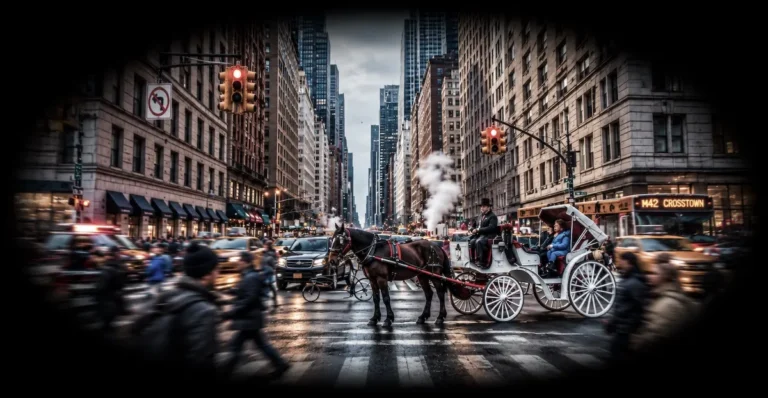
Horse-Drawn Carriages Banned in NYC
After 150 years, the carriage industry will wind down and the horses soon be off the streets, as Mayor Mamdani signs legislation this morning.
- Wayne Pacelle
This morning, Mayor Zohran Mamdani fulfilled a campaign promise and signed Romanch’s Law to phase out carriage horse rides in New York City.
In a world with so many animals at risk from human greed and coarseness, it’s a modest number of animals who’ll be liberated from this servitude. But those horses will have a far larger footprint than the width and depth of their shoes. This new policy, in America’s biggest city, is a marker of material progress for animals.
No more forced labor for horses and a ramp down of a vestigial practice ill-suited for the chaos and congestion in the heart of Manhattan.
On June 17, Romanch Mahajan, an Indian national celebrating his acceptance to college with a trip to New York, was killed after the horse hitched to the carriage in which he and three other family members were seated bolted through Central Park. As the carriage heaved left and right, the 18-year-old man tried to prevent his mother from being tossed to the ground, and in the process, he tumbled out at high speed and suffered a fatal head injury.
Just days before, Deniz collapsed and died after the driver allowed the 16-year-old carriage horse to graze on the poisonous leaves of a Japanese yew tree, even though city regulations forbid consumption of the plant life in Central Park. Dozens and dozens of other horses became victims of this enterprise.
New York City Mayor and City Lawmakers Stand Tall
Mayor Mamdani gave a lucid and compelling statement just before signing Intro. 943 into law. And he follows up on the work of a supermajority of the New York City Council, led on Intro. 943 by Council Member Chris Marte and Speaker Julie Menin, who led this work to end an obsolete practice devoid of any practical value and freighted with risk for horses and the people pulled along in the carriages.
The horse carriage operators have had a long history of recklessness, and the enterprise no longer deserves a free run in and around the jam-packed environs of Central Park and the streets surrounding it. There are 42 million people who visit Central Park every year, and think about all the hustle and bustle and noise and risk that this mass of humanity brings with it.
A network of hundreds of horse sanctuaries, rescue organizations, and caring horse lovers will help these beleaguered animals land in safer pastures, just as so many shelters and rescue groups were eager to make room for 2,000 beagles from Ridglan Farms.
When these horses are released from their yokes and harnesses, they can spend the rest of their lives grazing on pasture instead of standing on pavement, breathing fresh air instead of exhaust fumes, and enjoying the company of others of their kind, not working 10-hour days only to be stabled in a prison-like parking garage.
Over the course of my adult lifetime, I’ve watched our society reject practices once defended as major features of the American experience. We can add horse-drawn carriages in NYC to that roster of practices that have outlived their usefulness and that are no longer aligned with the values of most Americans.
Soon I’ll be able to go to Central Park to enjoy the visit — no longer morally troubled and depressed by the experience. You will, too.
Thanks to all the advocates who joined together to drive this outcome. And to Mayor Mamdani and the legislators who did the spadework to get the job done for the horses.
Wayne Pacelle, president of Animal Wellness Action and the Center for a Humane Economy, is the author of two New York Times bestselling books, “The Bond” and “The Humane Economy.”
Dear reader: If you support substantive policy work to protect animals, please consider donating to Animal Wellness Action here. You can give any amount one time, or make it a monthly gift, as many of our supporters do. Thank you for helping us fight for all animals.