USDA Halts Trafficking of Horses for Slaughter to Mexico
New World Screwworm Menaces Cattle, Horses
- Wayne Pacelle
Animal disease is an animal welfare issue.
When animals are sick, they suffer. When we can prevent debilitating illness in animals, it’s critical we do so.
With small but growing numbers of cases in the Southwest, New World screwworm is a disease that should concern everybody — from cattle ranchers to horse enthusiasts to animal protection advocates. It’s a debilitating, fly-borne disease afflicting cattle, horses, and other animals.
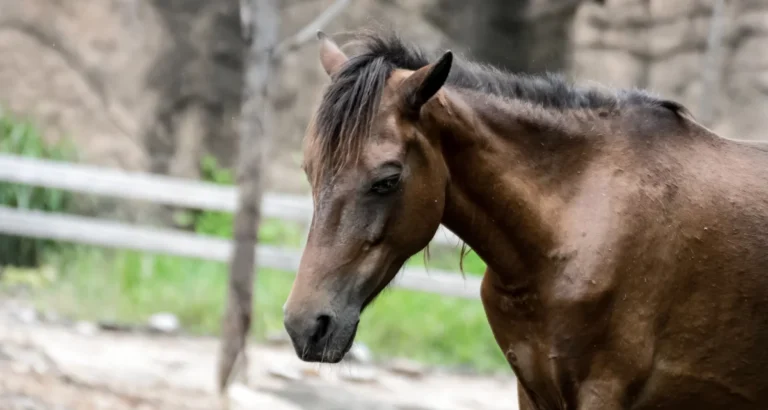
Now, because of the threat posed by New World screwworm, the U.S. Department of Agriculture (USDA) has suspended exports of horses and other animals to our southern neighbor. In short, the advance of the New World screwworm (NWS) threat has thrust the cross-border trade in horses destined for slaughter into the spotlight.
“The USDA’s decision is exactly the kind of precautionary action needed to protect livestock, animal health, and rural economies from a costly and preventable threat,” said Dr. Jim Keen, our director of veterinary science, when the Administration announced the emergency policy.
“It is hard to find a disease that causes so much pain and suffering as the New World screwworm,” Keen added. “The New World screwworm is a blowfly. The larvae (maggots) of most blowflies, such as the common metallic-appearing bluebottle fly, feed on dead tissue or carrion. Uniquely, the New World screwworm larvae are flesh-eating maggots that only attack living animals.”
After the eggs hatch in a wound or body opening (a tick bite, a castration cut, the umbilicus of a newborn calf, the nasal cavity of a horse, etc.), the tiny larvae crawl into the body orifice or damaged tissue and begin feeding on living flesh. Using hook-like mouthparts and rows of backward-pointing spines on their bodies, they work deeper and deeper into the wound, much like a screw turning into wood, true to its eponymous name. As they burrow, they enlarge the wound and create even more damaged tissue for other larvae to feed on.
A small cut can quickly become a deep, painful wound filled with dozens or even hundreds of screwworm larvae. If left untreated, the infestation can cause severe suffering, infection, and even death. Thus, the New World screwworm outbreak in the southern United States, the first in more than 60 years, is not only a game-changing economic concern for livestock and pet owners but also an immense, broader animal welfare concern.
Disease and the Horse Slaughter Pipeline
Too often, it takes a crisis for the government to address long-standing problems, and that’s where we are when it comes to cross-border movements of horses to Mexico, which slaughters nearly 20,000 American horses a year for human consumption.
The Administration’s precautionary approach is sensible, but it’s plain that this temporary suspension should morph into a permanent prohibition on the export of American horses for slaughter.
The horse slaughter industry — which is just a shadow of what it once was — is on life support, and this is a good moment to underscore why it’s the right policy to rid the nation of this enterprise, including exports of live horses to Mexico.
Approximately 25,000 American horses are exported for slaughter each year, with roughly 80% of the animals sent to Mexico. Unlike horses involved in breeding, competition, ranching, or other legitimate equine activities, these horses are funneled through a low-value commodity pipeline that aggregates animals from multiple sources and transports them long distances solely for slaughter.
The horses are not moving through established veterinary programs or organized equine enterprises. They are swallowed up by kill buyers, shipped through a fragmented transportation chain, denied any veterinary care and often any food or water, and transported hundreds or even thousands of miles to slaughter facilities across our two major borders.
No one is proposing restrictions on legitimate equine activities involving breeding, sport, exhibition, recreation, or ranch work. But there is no reason for the United States to continue assuming disease risks associated with a slaughter pipeline that serves a foreign horse-meat market while providing no meaningful benefit to American agriculture and that any caring American loathes.
Horse Slaughter Trade Near Collapse
For nearly two decades, Congress has maintained a ban on funding federal inspections for horse slaughter plants in the United States, preventing domestic slaughter operations from reopening. We are working to preserve that protection and ensure that horse slaughter does not return to American soil by retaining that long-approved language in the fiscal 2027 agriculture spending bill.
We are also pressing lawmakers to include the SAFE Act in the Farm bill. The legislation, led by Reps. Vern Buchanan, R-Fla., and Jan Schakowsky, D-Ill., in the House and Sens. Lindsey Graham, R-S.C., and Ben Ray Luján, D-N.M., in the Senate, would permanently prohibit both horse slaughter in the United States and the export of American horses for slaughter abroad. The Senate is expected to release Farm bill language soon, and we are working to promote the SAFE Act as a provision.
And just weeks ago, the House Transportation and Infrastructure Committee approved a bipartisan amendment offered by Reps. Jeff Van Drew, R-N.J., and Dina Titus, D-Nev. The measure incorporates key provisions of the SAFE Act by prohibiting the export of American horses to Canada and Mexico for slaughter and banning the use of dangerous double-decker trailers for horse transport.
Those legislative developments come at a time when this ugly enterprise is itself on life support.
Earlier this year, Bouvry Exports in Alberta shut down. For decades, Bouvry was one of the principal destinations for American horses shipped to Canada for slaughter. Its closure leaves only one remaining horse slaughter plant in Canada.
With so many people fighting to shut down North American horse slaughter operations, the number of American horses slaughtered annually has fallen from nearly 400,000 in 1990 to roughly 25,000 today.
The horse slaughter lobby has spent decades predicting an influx of unwanted horses if this trade disappeared. Yet as horse slaughter has declined by more than 90%, the dire predictions have fallen flat. There’s been no uptick in cases of abandonment or mistreatment — it was all just fearmongering from the get-go.
American horses should not be hauled across the border to die for a foreign meat trade. Tell Congress to end this cruelty now.
The horse slaughter industry is facing simultaneous pressure from Congress, from market realities, and now from concerns about animal health and disease spread menacing the cattle industry.
Even so, the suffering of the 25,000 horses caught in this trade is often too much to bear for people alert to the horror of horses gang-walked up a plank and into a truck bound for slaughter in Mexico.
Neither Congress nor the Trump Administration will finish off this sickening enterprise unless citizens demand action.
Let’s make 2026 the year the slaughter of American horses ends in our nation.
Your support powers every part of this campaign — investigations, legislative advocacy, veterinary expertise, coalition-building, media outreach, grassroots mobilization, and direct engagement with lawmakers and federal agencies.
Let’s finish the job and make 2026 the year that the slaughter of American horses ends in our nation.
Dear reader: If you support substantive policy work to protect animals, please consider donating to Animal Wellness Action here. You can give any amount one time, or make it a monthly gift, as many of our supporters do. Thank you for helping us fight for all animals.