Using Garbage as a Hunting Strategy
Trophy-hunting interests are trying to pull a fast one on Colorado voters with a deceptive constitutional amendment to make bear baiting and the use of steel traps legal again.
- Wayne Pacelle
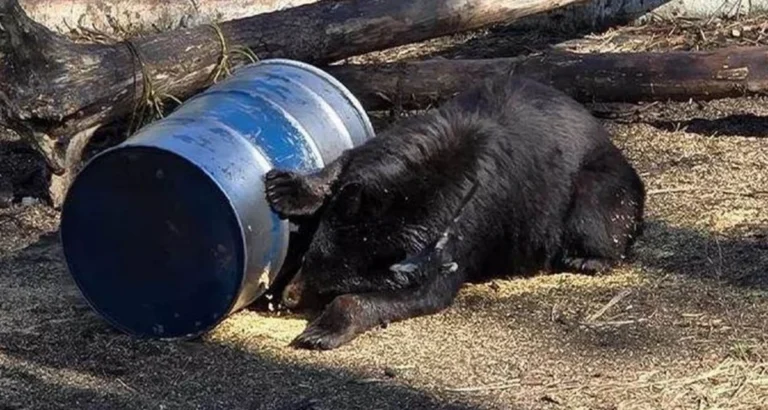
In states where bear baiting is legal, it’s as if the national forests have been ransacked. There are mounds of discarded human food and other waste, featuring moldy meat scraps, hardened pizza crusts, mangled loaves of bread, cattle bones, Twinkiewrappers, and jelly doughnuts — a smorgasbord slathered in reeking grease.
It’s a form of hunting stripped bare of the norms of fair chase. And the proscriptions against feeding the bears have also been thrown into the trash.
No tracking skills needed here. Just a pickup truck loaded with food waste headed away from the town dump.
Whereas the garbageman takes your trash and puts it out of sight, the garbage-totingbaiters leave their mess in plain sight for bears and other forest users to see and smell.
I worked to ban bear baiting in Colorado, Massachusetts, Oregon, and Washington. And I’ve worked, as best I can, to limit it on federal lands, especially in Alaska.
We’re in the throes of two wars against adversaries who want to reverse our gains: one in Colorado, to be decided in days, and the other in Alaska, where a forthcoming court case will be the latest in a seesaw battle pitting responsible hunters and animal advocates against slob hunters and their shameless political allies over bear baiting on 22 million acres of National Park Service land.
Defeating a Constitutional Amendment to Make Bear Baiting Legal
In 1992, 70% of Colorado voters approved a landmark ballot measure banning bear baiting and hounding and hunting bears in the spring, when they’re lethargic from hibernation, and sows are nursing their cubs.
Tom Beck, a former bear biologist with the Colorado Division of Wildlife (now Colorado Parks and Wildlife), is a lifelong hunter. He spoke up against the division during the 1992 campaign, publicly questioning the ethics of shooting a bear attracted to bait.
“How sporting is it to shoot a bear with its head in a bucket of jelly donuts?” Beck asked. “I don’t believe anyone who says you can’t hunt bears in the fall when they’re on berries or nuts. You can predict where they’re going to be, and if you’re a woodsman, all you have to do is scout those places.”
Beck eventually fled Colorado after the National Rifle Association and Safari Club International smeared him as an apostate for calling out baiters for setting out hundreds of dump sites across the state’s generally pristine landscapes. Now, 34 years later, those same national hunting organizations have poured $3.5 million into passing Amendment 83, a proposal that, if passed, would render moot the protections for bears and other animals that people like Beck fought so hard to have enacted. By promoting a sweepingly broad constitutional right to hunt and trap, Amendment 83 proponents would open the door not only to legalized bear baiting but also to the return of long-restricted steel-jawed traps.
This week, in an open letter to Colorado voters, 21 leading bear biologists, wildlife scientists and conservation professionals warned that Amendment 83 puts the state’s ban on bear baiting at extreme risk. The signatories are a who’s who of top bear biologists in America, most of them sportsmen.
They explain how Amendment 83’s undefined language guaranteeing a constitutional right to hunt and trap by “traditional methods” will invite legal challenges to existing wildlife protections and strip voters, state lawmakers and the Colorado Parks and Wildlife Commission of their authority to make wildlife policy.
“Passage of Amendment 83 would not automatically repeal the 1992 restrictions,” the experts write. “However, its broad, undefined language and elevated status as a constitutional provision, rather than an ordinary statute, raise concerns about its potential to limit future legislation or ballot measures, affect hunting regulations, and invite costly legal challenges to existing wildlife protections.”
They assert, with evidence, that bear baiting can alter bears’ feeding behavior and condition them to associate people with food, potentially increasing dangerous encounters between bears and humans.
The signatories point to a 2024 scientific assessment identifying food conditioning, defensive behavior at bait stations, and increased human-bear conflicts as important risks. They also cite a 2024 National Park Service decision prohibiting bear baiting for sport hunting in Alaska’s national preserves, following consultations with wildlife professionals and bear specialists. (That ban has now been repealed by the Trump administration, at the behest of the same groups pushing Amendment 83, and we’ve promised to challenge that repeal in federal court.)
Acclaimed outdoor writer and lifelong sportsman Ted Williams also questioned the rationale behind Amendment 83 and the effort to restore practices that voters previously rejected.
“Groups pushing Amendment 83 condemn all ballot initiatives except, of course, this one,” Williams said. “And they recycle the ancient superstitions that predators need to be ‘managed’ — id est, killed — to generate more game.”
Colorado Gov. Jared Polis has also warned that Amendment 83 “would invite lawsuits,” while state Attorney General Phil Weiser has described it as an “invitation to litigation, to uncertainty and confusion.”
Following the Scent of Money
The most transactional hunting guides love bear baiting because it virtually guarantees a kill, allowing them to collect trophy fees of $7,500 to $10,000 under no-kill, no-pay arrangements.
It’s the moral and sporting equivalent of shooting a bear in a cage at a zoo.
But in terms of both human and animal behavior, it’s worse than that. The baited bears not shot during the hunting season can become habituated to human food, and they may wander into town, break into homes and cars, and bask in swimming pools in the summer. Then, too often, these bears are labeled public safety threats and killed by wildlife authorities — victims of the very behavior that baiting encouraged.
The National Park Service banned the dumps at Yellowstone National Park decades ago. The national forests have signs everywhere that admonish visitors to “never feed bears.”
Yet there’s an exemption for people who want to shoot bears while the bears’ heads are in a bait barrel?
Someone who hunts this way is no sportsman. That person is a vandal dressed up like one.
Support our efforts to defeat Amendment 83 and stop bear baiting!
Wayne Pacelle, president of Animal Wellness Action and the Center for a Humane Economy, is the author of two New York Times bestselling books, “The Bond” and “The Humane Economy.”
P.S. For more information on Amendment 83 and how to be involved, go to www.VoteNo3.org.